Golden-hour view of the Acropolis of Athens, the Parthenon, the Propylaea, and the Odeon of Herodes Atticus

Aurea Editions · Issue No. 01 · Athens

EN / 繁體中文

The Rock That Anchors Eternity

For twenty-five centuries, the Acropolis has stood 156 metres above the Attic basin — not as a relic sealed behind glass, but as the living compass of Athens, the measure of its light, and the quiet anchor of the neighbourhoods gathered at its feet.

447 BC · The Periclean Vision 156 Metres · Above the Attic Basin 4.0 km · Car-Free Grand Promenade 365 Days · Year-Round Cultural Gravity 6 Residences · Within 4 km

01 · History & Architecture

Built Without a Single Straight Line

“To the ancient Athenians, perfection was never rigid geometry. It was geometry corrected by the human eye and softened by Mediterranean light.”

When Persian forces burned the archaic temples of the Acropolis in 480 BC, the Athenians made a decision that still defines the city’s character: for more than thirty years, they left the charred columns untouched on the summit as a public oath of remembrance. Only at the height of the fifth-century Golden Age did Pericles summon architects Ictinus and Callicrates, alongside the sculptor Phidias, to raise a new sanctuary in pure white marble.

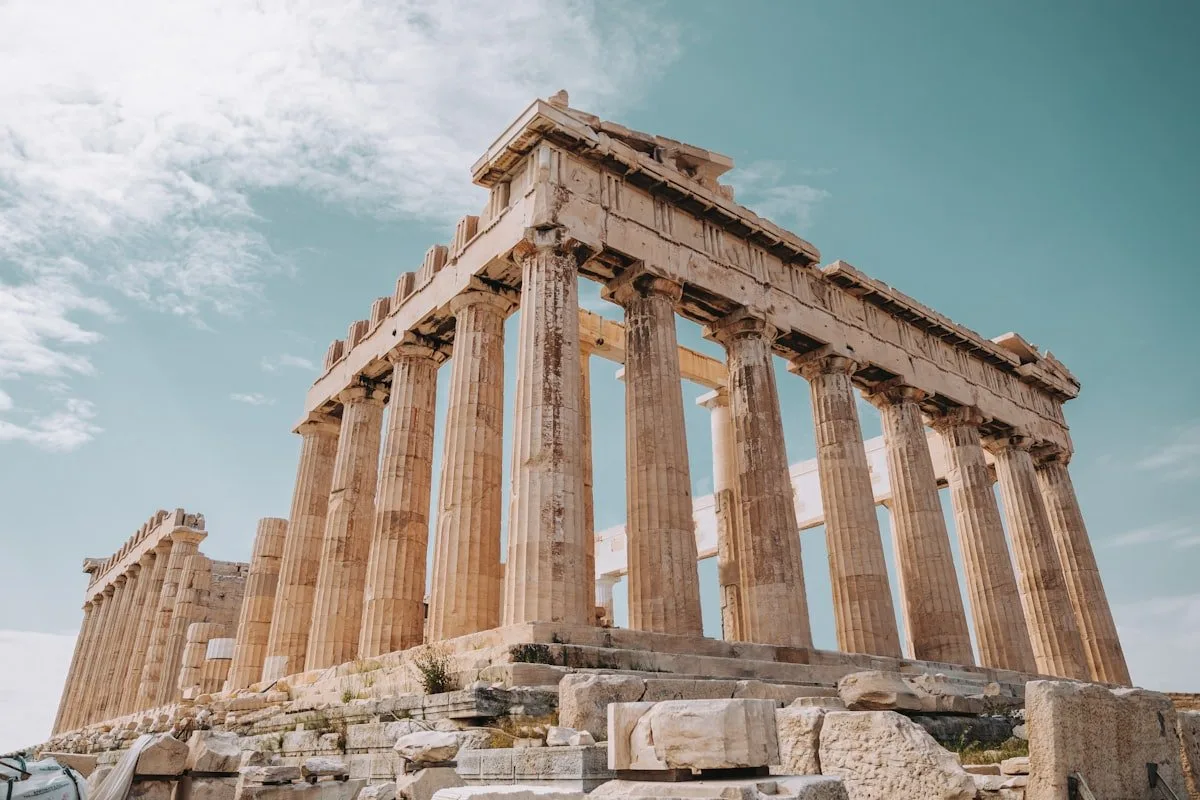
Completed in just fifteen years (447–432 BC), the Parthenon appears from afar as the ultimate triumph of straight lines and mathematical order. Yet when measured by modern architects, it reveals an astonishing secret: there is not a single truly straight line in the entire temple. Every stone was hand-carved to counter optical illusion, giving thirty thousand tonnes of marble the poise of a living organism.

Low-angle architectural view of the Parthenon Doric columns and Pentelic marble entablature against the Athens sky
Fig. 01 · The Doric Peristyle of the Parthenon Pentelic Marble · 447–432 BC
I · The Thirty-Year Oath

Fifteen Years That Defined Western Space

Between 447 and 406 BC, a city of fewer than three hundred thousand citizens created four structures that still govern architectural education worldwide: the Parthenon, the monumental gateway of the Propylaea, the suspended porch of the Temple of Athena Nike, and the asymmetric Erechtheion with its six Caryatid maidens.
II · The Secret of Entasis

Why Every Column Leans Toward the Sky

The marble platform (stylobate) rises 11 centimetres toward its centre so it never appears to sag. Every outer column swells subtly at mid-shaft (entasis) and tilts 6.5 centimetres inward—if extended 2.4 kilometres into the Attic sky, the colonnade would converge at a single invisible point above the city.

III · Pentelic Alchemies

Stone That Turns to Honey at Dusk

Quarried sixteen kilometres away on Mount Pentelicus, the marble of the Acropolis contains microscopic traces of iron. Exposed to twenty-five centuries of sea breeze and sun, that iron has oxidised into a warm patina that shifts from luminous ivory at noon to deep amber-gold in the last twenty minutes of daylight.

Architectural Blueprint · Optical Refinements & Solar Alchemy

The Parthenon Elevation: Entasis & The 24-Hour Pentelic Arc

Scroll through this chapter or select a solar hour below to trace how Mount Pentelicus marble shifts chromatic temperature across the Attic sky, while Ictinus and Callicrates’ optical counter-curves correct the human eye.

Architectural Elevation of the Parthenon East Facade with Optical Refinements and Solar Arc Measured diagram showing the eight Doric columns of the Parthenon, the 11-centimetre upward curve of the stylobate, the 6.5-centimetre inward inclination of the outer colonnade, and the solar path from Mount Hymettus at dawn to the Saronic Gulf at dusk. EAST · HYMETTUS DAWN (07:45) 156 M ASL · SACRED ROCK DATUM · 30.88 M STYLOBATE WIDTH WEST · SARONIC GULF DUSK (19:30) 07:45 13:30 ZENITH 19:30 6.5 CM INWARD TILT · CONVERGES 2.4 KM ABOVE ATHENS +11.0 CM DOMED STYLOBATE RISE ENTASIS SWELL (+1.7 CM) Vital muscular tension at mid-drum
Active Solar Hour 13:30 · Attic Zenith
Pentelic Marble Albedo Luminous White Alabaster
Stylobate Counter-Curve +11.0 cm Centre Rise
Peristyle Axis Geometry 6.5 cm Inward · Active
13th c. BC Mycenaean Citadel

A Mycenaean ruler walls the summit with massive Cyclopean limestone blocks; traces still stand beside the gateway.

480 BC The Persian Sack & Oath

Persian forces burn the archaic sanctuary; Athenians embed the scorched drums in the north wall and wait 33 years to rebuild.

447–406 BC The Periclean Ensemble

Ictinus, Callicrates, and Phidias raise the Parthenon (447–432 BC), followed by the Propylaea, Athena Nike, and Erechtheion.

AD 161 The Herodeion

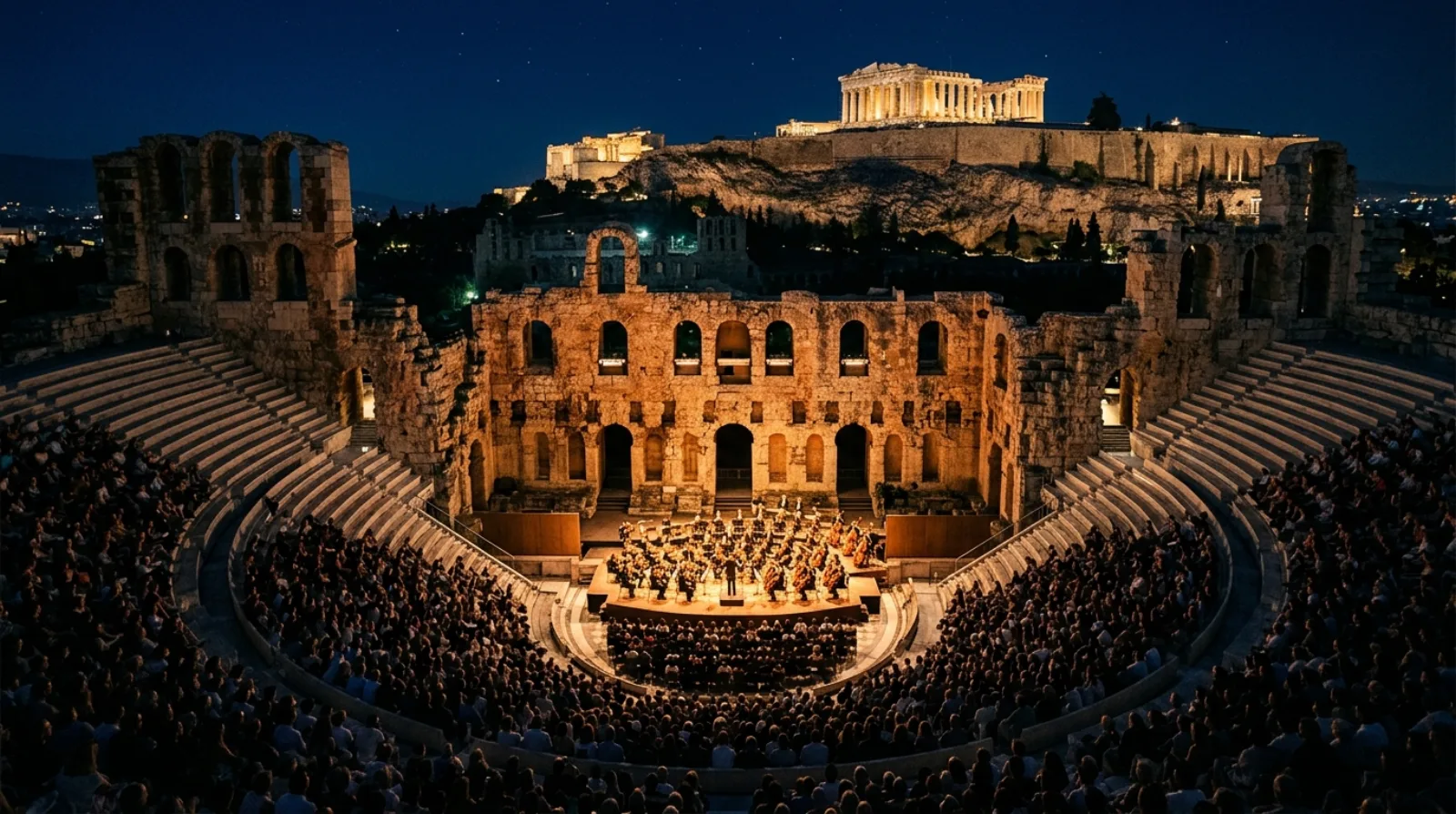
Herodes Atticus carves a 5,000-seat marble odeon into the southern cliff face, still hosting world orchestras each summer.

1687 & 1801 Siege & Dispersal

A Venetian mortar ignites gunpowder inside the Parthenon in 1687; from 1801 onward, Lord Elgin removes most of the frieze.

1929 & 2020 The Skyline Rules

The 1929 building code ties heights to street width; a 2020 presidential decree caps new buildings beside the Acropolis at 21 metres so no tower intrudes on the Rock.

1975–Now ESMA / YSMA Restoration

Systematic conservation replaces early 20th-century Balanos rusted iron clamps that split the marble; UNESCO listing follows in 1987.

2009 & 2023 Museum & Timed Entry

Bernard Tschumi’s Acropolis Museum opens in 2009; in Sept 2023, a 20,000-visitor daily cap and timed-entry system protect the hill.

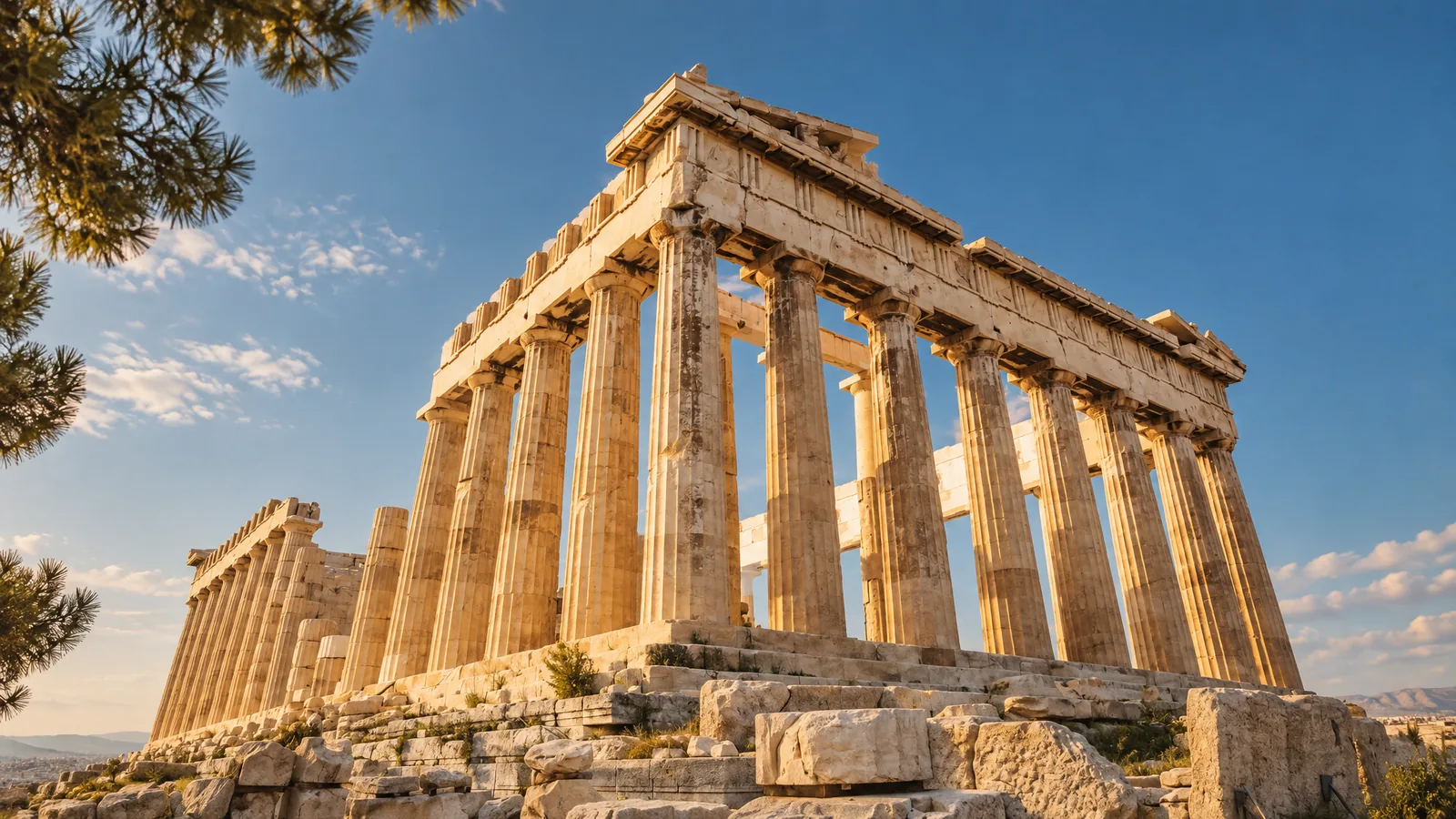
Illustration: the Doric colonnade of the Parthenon in late-afternoon Mediterranean light
Plate B·I · Late-afternoon light on the Parthenon colonnadeIllustration · Aurea Editions

02 · Wars, Sieges & Resurrection

The Scars in the Sacred Stone

The Acropolis is not an unblemished porcelain monument preserved in isolation. For twenty-five centuries it has endured imperial invasions, bombardments, sieges, and occupation — and every trial left a physical signature in the marble that you can still trace with the naked eye today.

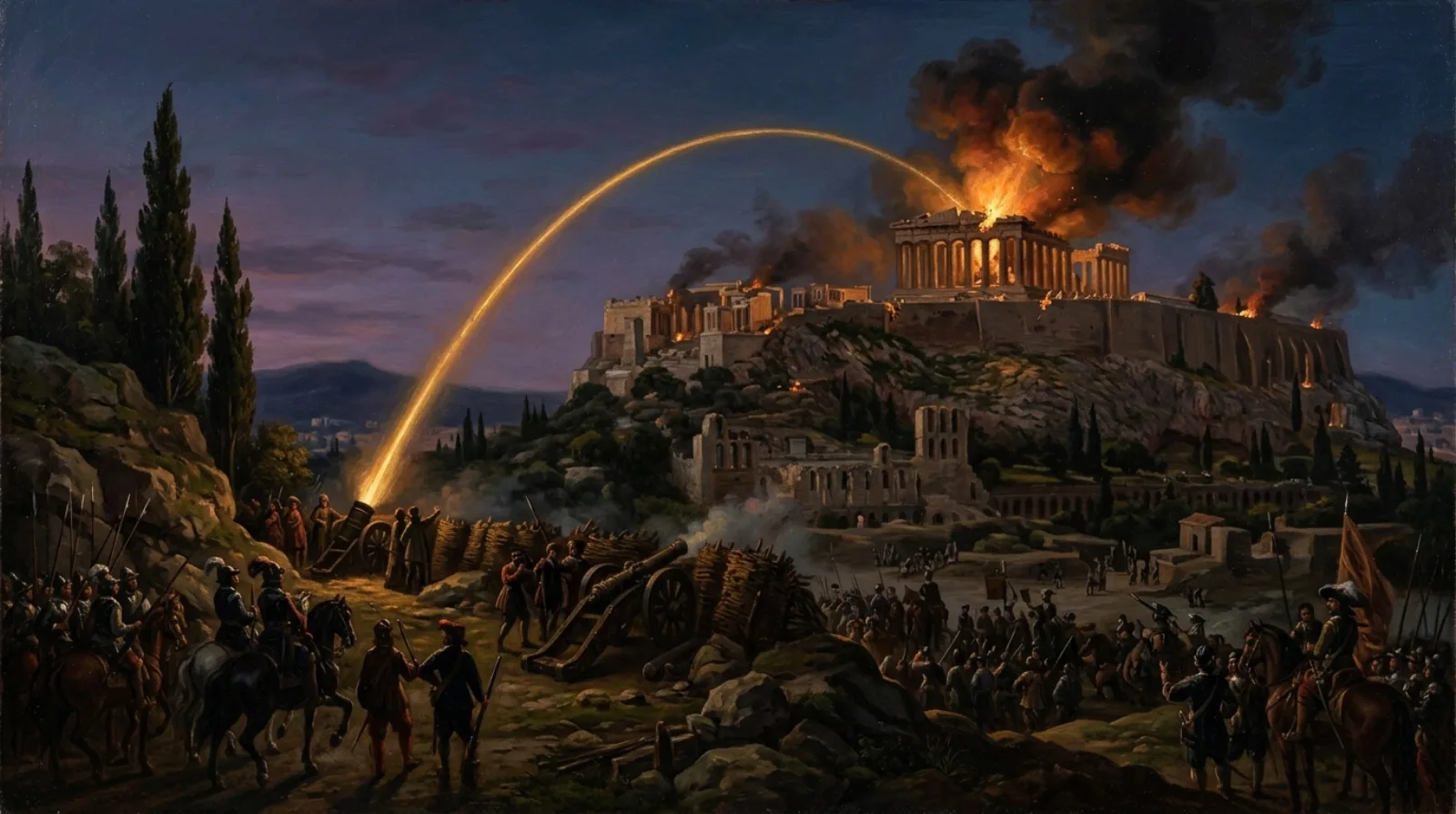
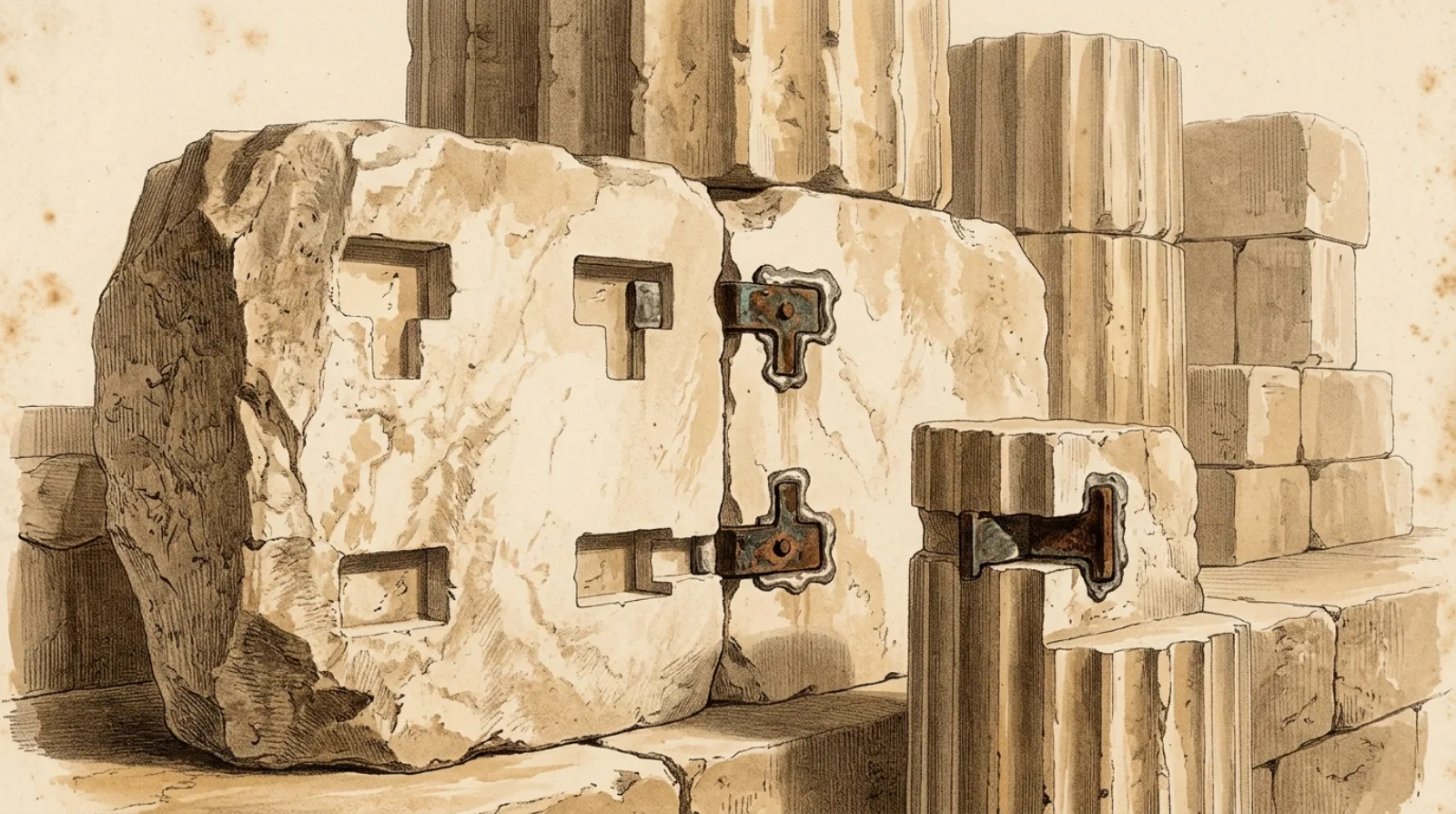
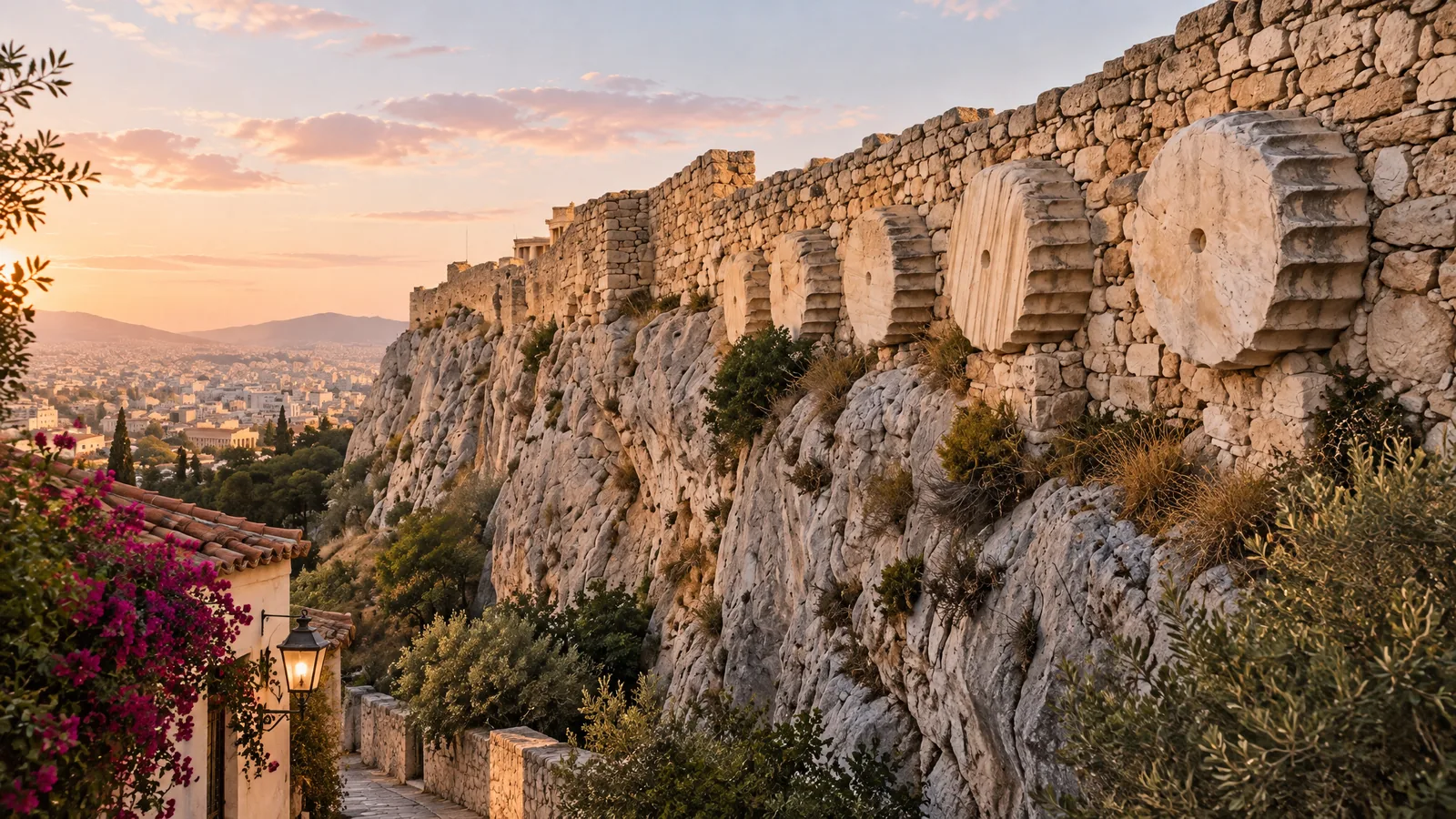
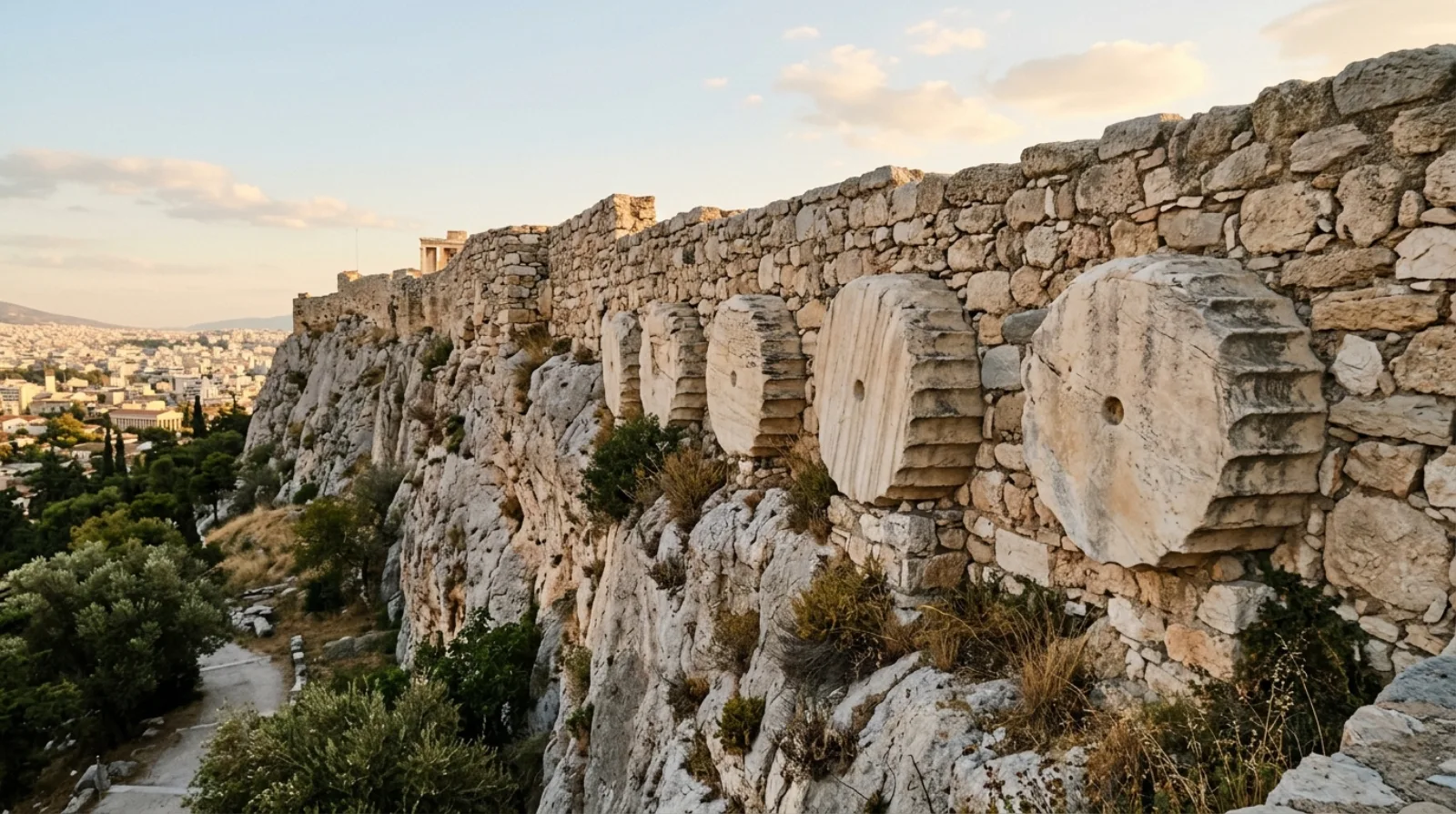
Unfluted archaic marble column drums from the Older Parthenon embedded horizontally into the Northern Wall of the Acropolis after the 480 BC Persian sack Historical architectural view of the 26 September 1687 Venetian siege mortar trajectory from Philopappos Hill toward the Parthenon Close-up architectural study of Pentelic marble column drums and ancient lead-encased iron clamp sockets on the Acropolis First light of dawn breaking over the cliff face and flagpole of the Acropolis of Athens, honouring the night of 30 May 1941
Sightline: North Wall · Visible from Plaka & Monastiraki 480 BC
Plate I · 480 BC Twenty-six fire-scarred column drums from the Older Parthenon set horizontally into the Northern Wall by Themistocles as an eternal public memorial.
Episode I · 480 BC · The Persian Invasion

The Persian Sack & The Oath in the Northern Wall

In the late summer of 480 BC, King Xerxes’ Persian army entered an evacuated Athens and torched every sanctuary on the Acropolis, including the unfinished marble Older Parthenon. Before the Battle of Plataea, the Greeks swore a solemn covenant: they would leave their burned temples in ruins for a generation as a visible reminder of what barbarism had done.

When Themistocles and Cimon refortified the summit, they buried the shattered archaic statues (korai) reverently inside the rock fill (the Perserschutt, unearthed immaculate in the 1880s) and mounted the scorched, unfluted marble column drums of the destroyed temple horizontally into the outer Northern Wall.

Where to see it today: Walk through Plaka or Monastiraki Square and look straight up at the northern fortification wall of the Acropolis — the row of giant white marble discs staring down at the modern city are those exact 480 BC column drums.
Chronicle 1 of 4 · 480 BC
Episode II · 26 September 1687 · The Great Explosion

The Venetian Mortar & The Night the Parthenon Exploded

It is easy to forget that for more than two thousand years (432 BC to AD 1687), the Parthenon stood roofed and structurally whole — first for a millennium as the temple of Athena Parthenos, then as the Byzantine cathedral of Panagia Atheniotissa (Our Lady of Athens), and later as an Ottoman mosque.

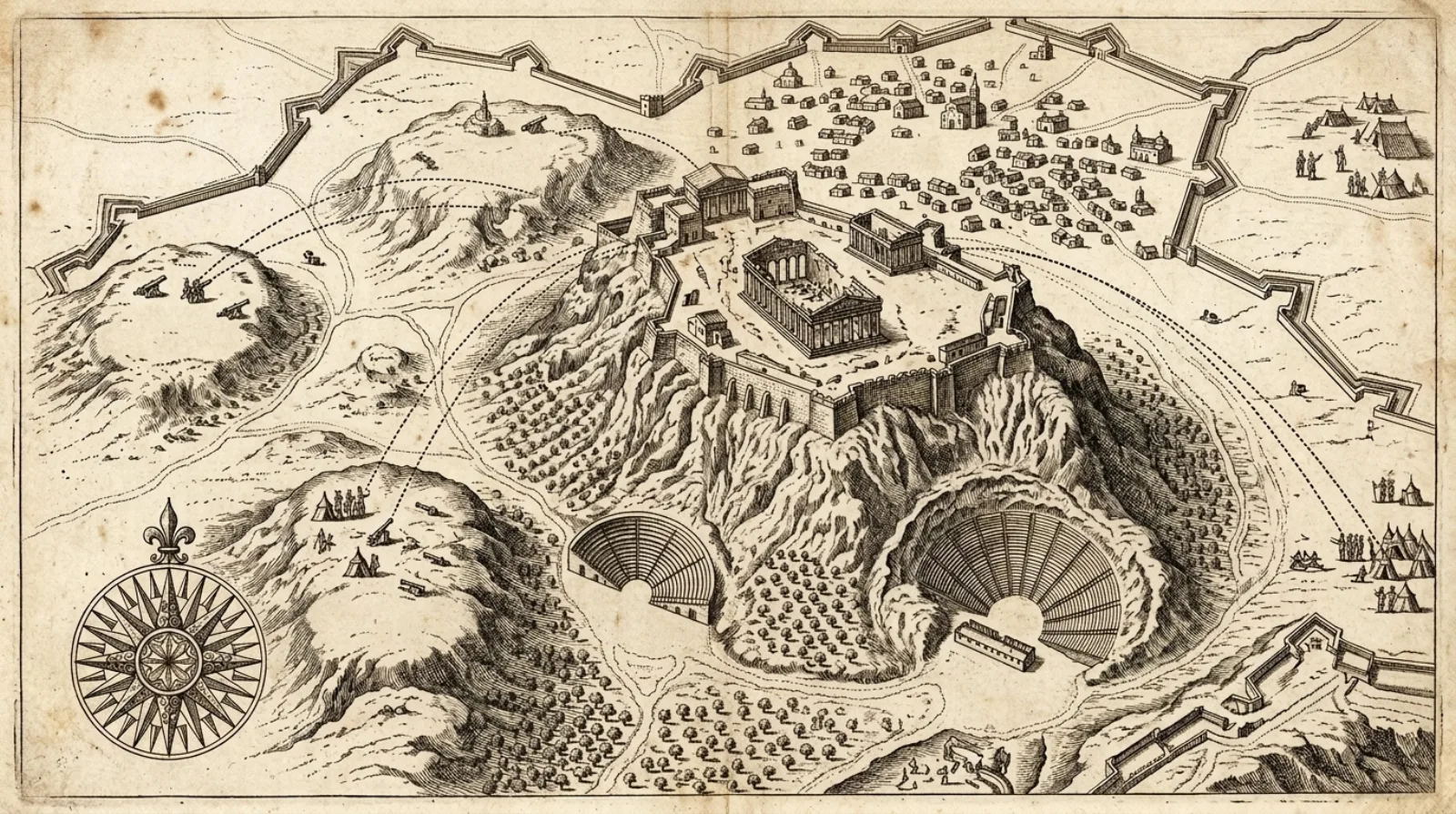
During the Morean War in September 1687, Venetian forces under Francesco Morosini positioned artillery batteries on Philopappos Hill — directly across today’s Dionysiou Areopagitou promenade. On the evening of 26 September, a Venetian mortar shell pierced the marble roof of the Parthenon and ignited three hundred barrels of gunpowder stored inside by the Ottoman garrison. Two-thirds of the cella walls and twenty-eight columns were blown apart in a single instant; a century later, from 1801 onward, the British ambassador Lord Elgin sawed away and removed the majority of the surviving frieze and pedimental sculptures.

Where to see it today: Stand at the summit of Filopappou Hill along Pikionis’ stone path to trace the exact artillery line across the valley toward the shattered flanks of the Parthenon peristyle.
Chronicle 2 of 4 · 26 Sept 1687
Episode III · 1821–1827 · The War of Independence

“Here Are the Bullets — Do Not Touch the Marble Columns”

Fifth-century Greek masons used no mortar. Instead, they locked each Pentelic marble drum to the next using wrought-iron H-clamps sealed in molten lead (molybdos), giving the columns flexible seismic resilience against earthquakes.

During the 1821–1822 siege of the Acropolis in the Greek War of Independence, the besieged Ottoman garrison ran short of ammunition and began smashing the standing marble columns of the Parthenon and Erechtheion to pry out the ancient lead clamps and melt them into musket balls. When the Greek revolutionary fighter and self-taught antiquarian Kyriakos Pittakis (who later became free Greece’s first Ephor of Antiquities) learned what was happening, so the story goes, the Greek besiegers sent crates of their own lead bullets up the hill to their enemies.

“Here are the bullets — do not touch the marble columns.”
Where to see it today: Deep chisel gouges at the joints of fallen drums on the Acropolis plateau — and the rusted 1900s iron replacements by Nikolaos Balanos now being systematically replaced with titanium by ESMA/YSMA since 1975 — testify to that struggle.
Chronicle 3 of 4 · 1821–1827
Episode IV · 30 May 1941 · The Dawn of Resistance

The Night Two Teenagers Climbed the Sacred Rock

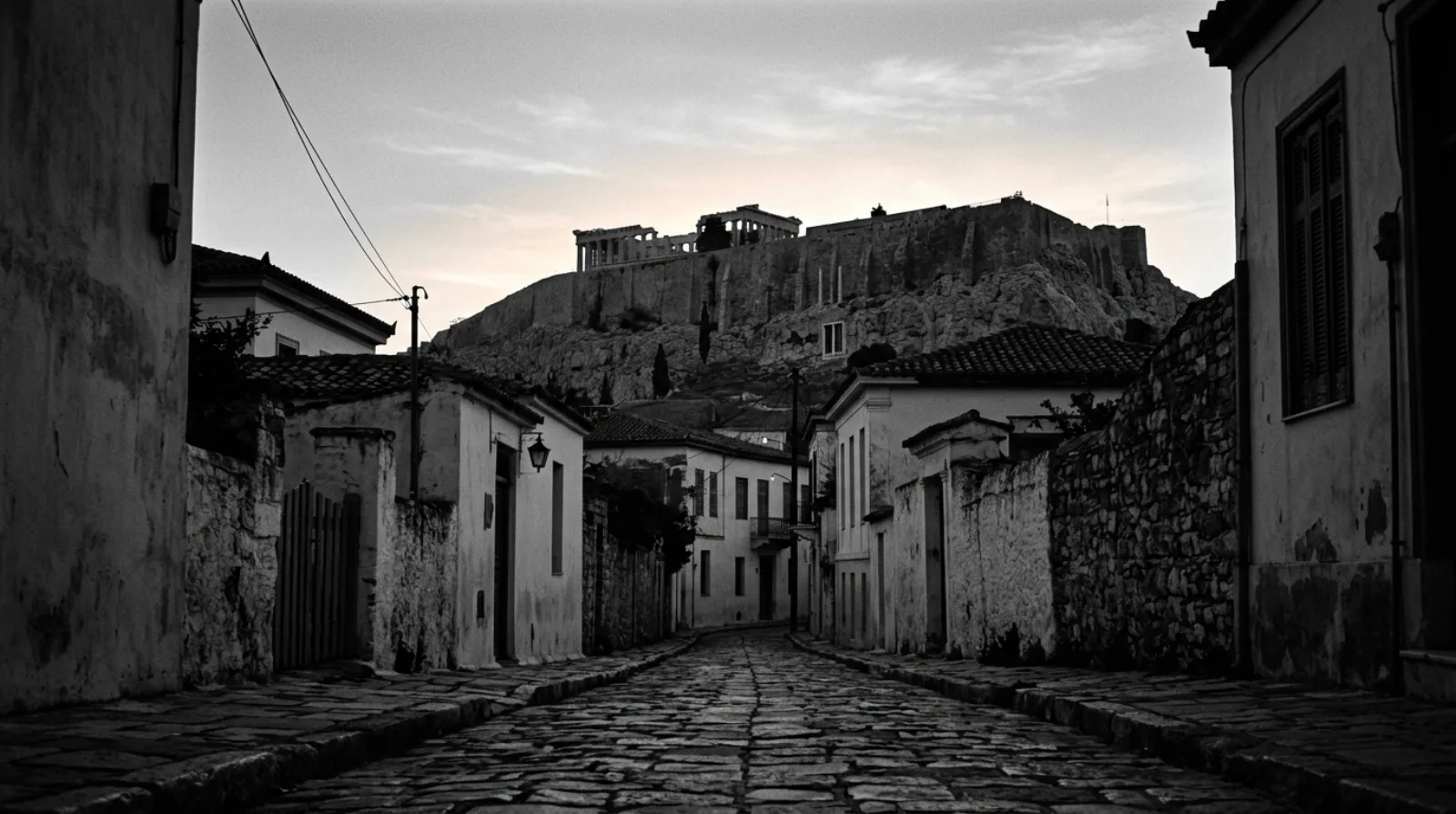
German forces entered Athens at the end of April 1941 and raised the swastika flag over the Acropolis crest, visible from every street and balcony in the capital. One month later, on the moonless night of 30 May 1941, two university students, eighteen and nineteen years old — Manolis Glezos and Apostolos Santas — slipped past German sentries, scaled the sheer northwest limestone cliff in darkness, and cut the emblem down.

When Athenians opened their shutters on the morning of 31 May, the invader’s banner was gone against the clear Attic sky. Both youths were sentenced to death in absentia; their silent climb is honoured across Europe as one of the earliest symbolic acts of resistance in World War II.

Where to see it today: At the eastern Belvedere viewpoint of the Acropolis, a bronze commemorative plaque marks the flagpole where the blue-and-white flag of Greece is raised at dawn and lowered at sunset every day.
Chronicle 4 of 4 · 30 May 1941
Read All Four Siege Chronicles in Full (480 BC · 1687 · 1821 · 1941)
All four historical siege chronicles are now expanded in a 2×2 matrix above. Click any era card or tab to inspect its corresponding archival plate.
Illustration: the column drums of the Acropolis north wall above a Plaka lane at dawn
Plate B·II · Dawn on the north wall, seen from PlakaIllustration · Aurea Editions

03 · Historical Cartography & The Sacred Way

One Processional Road Across Twenty-Five Centuries

In ancient Athens, the civic spine of the polis was the Panathenaic Way: a 1.5-kilometre ceremonial road linking the Dipylon Gate and Pompeion in Kerameikos through the Ancient Agora up to the Parthenon. In the 21st century, the Unification of Archaeological Sites expanded that footprint into a 4.0-kilometre car-free pedestrian promenade — connecting the exact neighbourhoods where Aurea’s residences stand today.

Interactive Topographical Overlay · 447 BC vs. 2026

The Panathenaic Sacred Way & The Contemporary Residential Orbit

Comparative Cartography of the 447 BC Panathenaic Sacred Way and the 2026 Acropolis Pedestrian Promenade and Aurea Residential Orbits Topographical map of central Athens tracing the ancient Panathenaic route from Dipylon Gate in Kerameikos through the Ancient Agora to the Parthenon, overlaid with the modern 4 km car-free promenade and Aurea residences in Kerameikos, Gazi, Kynosargous, Ampelokipoi, Kallithea, and Metro Line 2. ← METRO LINE 2 DIRECT AXIS (PERISTERI SUITES) ↙ SYNGROU AXIS TO KALLITHEA, SNFCC & SEA Dipylon Gate & Pompeion (Kerameikos) 447 BC Procession Assembly · 0.0 km Ancient Agora Civic Heart & Stoa of Attalos Pnyx Hill Birthplace of Democratic Assembly Propylaea THE PARTHENON (156 m) SACRED ROCK SUMMIT · 1.5 KM Anafiotika & Plaka (North Cliff) Herodeion & Dionysiou Areopagitou Filopappou Hill (Pikionis Path) New Acropolis Museum KERAMOS RESIDENCES ALENA IMPERIAL PALACE NEGRI ACROPOLIS RESIDENCES MINOAS RESIDENCES ↗ HELIOS & BELLA VISTA (KALLITHEA) 447 BC Panathenaic Way (1.5 km) 2026 Pedestrian Promenade (4.0 km) Aurea Golden Visa Residences
Explore 3 Historical Survey Maps (1687 · 1762 · 1881) & Procession Waypoints
01 · Dipylon Gate & Pompeion

Where the Procession Began

Every Panathenaic festival assembled at the Dipylon Gate in Kerameikos to carry Athena’s woven peplos up to the rock — steps from where Keramos and Alena Imperial Palace stand today.

02 · Agora & Pnyx Hill

Democracy in the Sightline

The Sacred Way crossed the Ancient Agora while citizens debated laws on the stone speaker’s platform of Pnyx Hill with the Parthenon rising directly behind them.

03 · Dionysiou Areopagitou & Pikionis

The Car-Free Living Room

Unified before 2004, the pedestrian promenade links the Herodeion and Dimitris Pikionis’ 1950s hand-laid stone path on Filopappou Hill to whitewashed Anafiotika.

04 · Museum & Southern Orbit

Kynosargous to the Sea

Below the Acropolis Museum and EMST lies Kynosargous (Negri Acropolis Residences) and the Syngrou cultural axis down to Kallithea and Renzo Piano’s SNFCC.

1687 Venetian military cartographic survey of the Acropolis of Athens by engineer Giacomo Verneda showing artillery positions on Philopappos Hill
Archival Plate I · 1687 / 1707

Venetian Siege & Mortar Survey (Giacomo Verneda)

Drawn by Venetian military engineer Giacomo Verneda and published in Francesco Fanelli’s Atene Attica, this copperplate survey records the medieval fortifications of the Acropolis alongside the exact mortar trajectories fired from Philopappos Hill in September 1687.

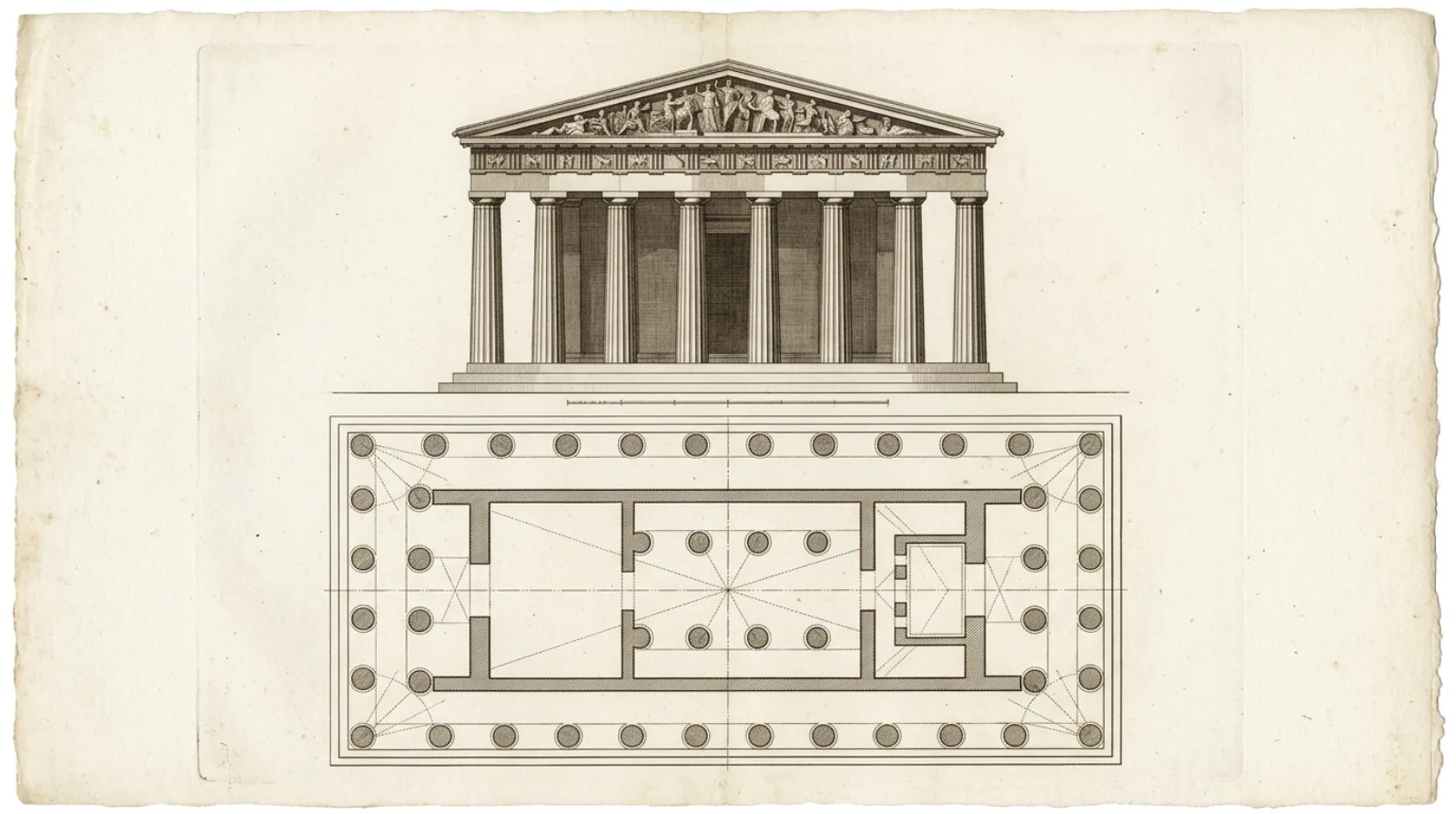
1762–1787 measured architectural survey and trigonometric plan of the Acropolis and Parthenon by James Stuart and Nicholas Revett
Archival Plate II · 1762–1787

The Antiquities of Athens (Stuart & Revett)

Spending over three years measuring the Acropolis stone by stone with trigonometric instruments, British scholars James “Athenian” Stuart and Nicholas Revett produced the first accurate architectural plans of the Parthenon, published in the second volume of 1787 — igniting the Classical Revival from London to Philadelphia.

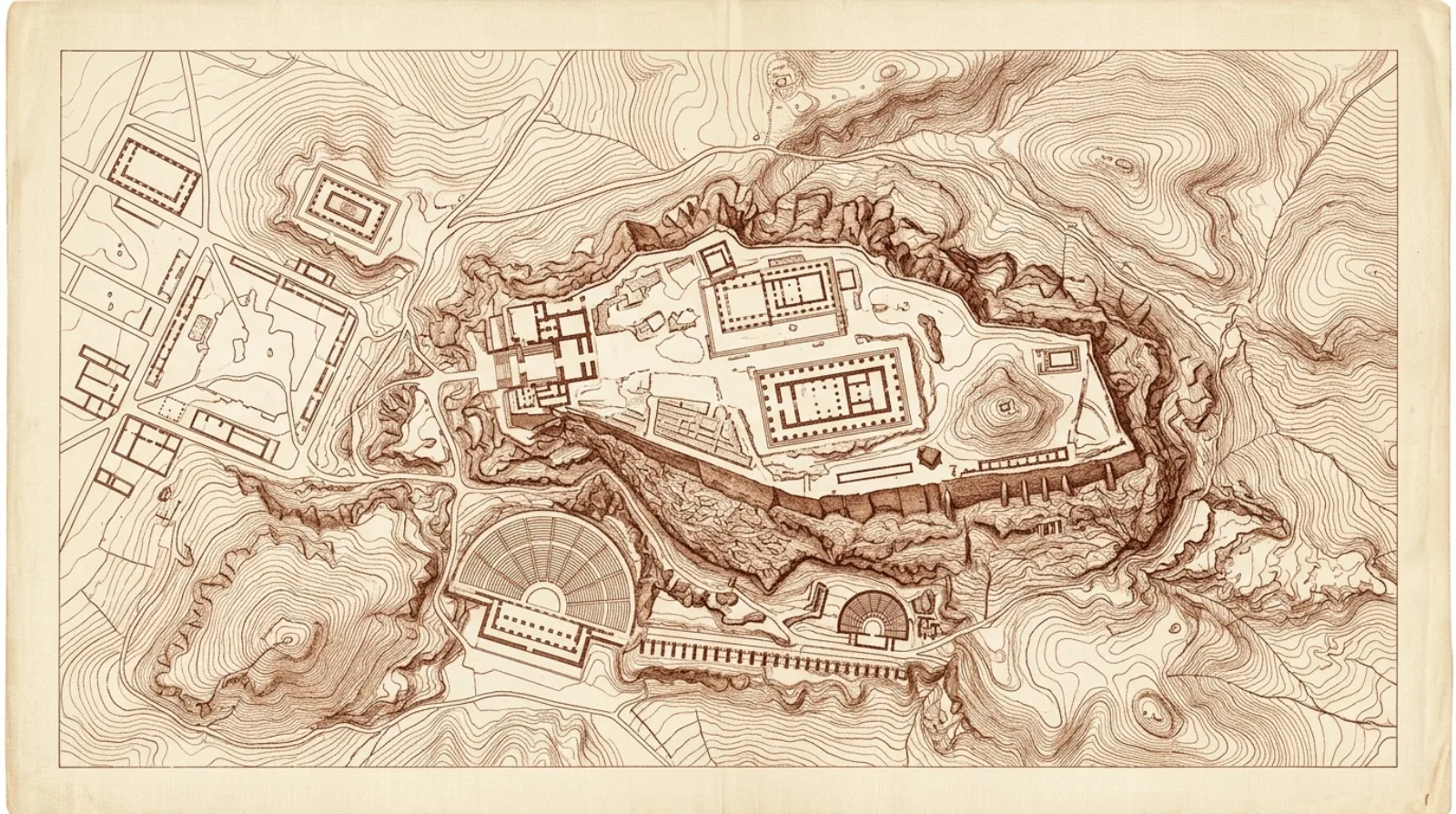
1881 Karten von Attika 1:25,000 topographical contour map of the Acropolis, Pnyx, Areopagus, and Kerameikos by Ernst Curtius and Johann August Kaupert
Archival Plate III · 1881

Karten von Attika (Curtius & Kaupert)

Commissioned by the German Archaeological Institute and surveyed by Prussian cartographer Johann August Kaupert with Ernst Curtius, this 1:25,000 contour masterpiece mapped every rock-cut foundation across the Acropolis, Pnyx, Filopappou, and Kerameikos.

View of the Acropolis and Parthenon framed through an open wooden apartment window with a morning coffee cup on the sill
Fig. 02 · The Daily Horizon Morning Sightline Across the Low-Rise Basin

04 · What It Means to Greeks

Not a Monument. The Daily Compass of a People.

“In Athens, you never lose your way. You simply look up.”

Spend a week living in Athens and you notice something subtle: Athenians rarely call it “the Acropolis” in intimate conversation. They call it O Ieros Vrachos (Ο Ιερός Βράχος) — The Sacred Rock. It is not a museum piece visited once on a school trip; it is the silent participant in four million lives below.

Across the hills of Koukaki, Filopappou, Thiseio, and Kallithea, the Rock dictates how apartments are oriented, where balconies are cantilevered, and when the evening begins. When the floodlights warm the marble columns just after sunset, balconies across the city fill with quiet conversation and clinking glasses.

01 · The Skyline Law

A City That Refused Skyscrapers for a Temple

Why does Athens have no glass towers in its historic basin? Under Greek building statutes established in the twentieth century, strict height limits ensure no modern roof ever competes with the Parthenon. For property owners, this cultural reverence creates an irreplaceable dynamic: central Athens can never be vertically diluted.

02 · The Evening Promenade

Six O’Clock on Dionysiou Areopagitou

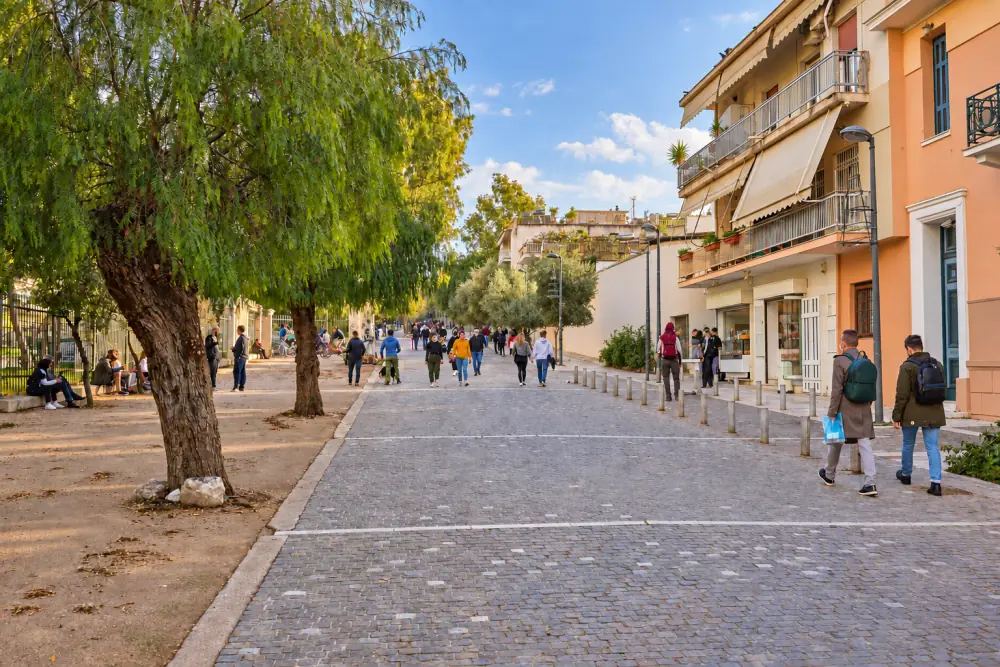
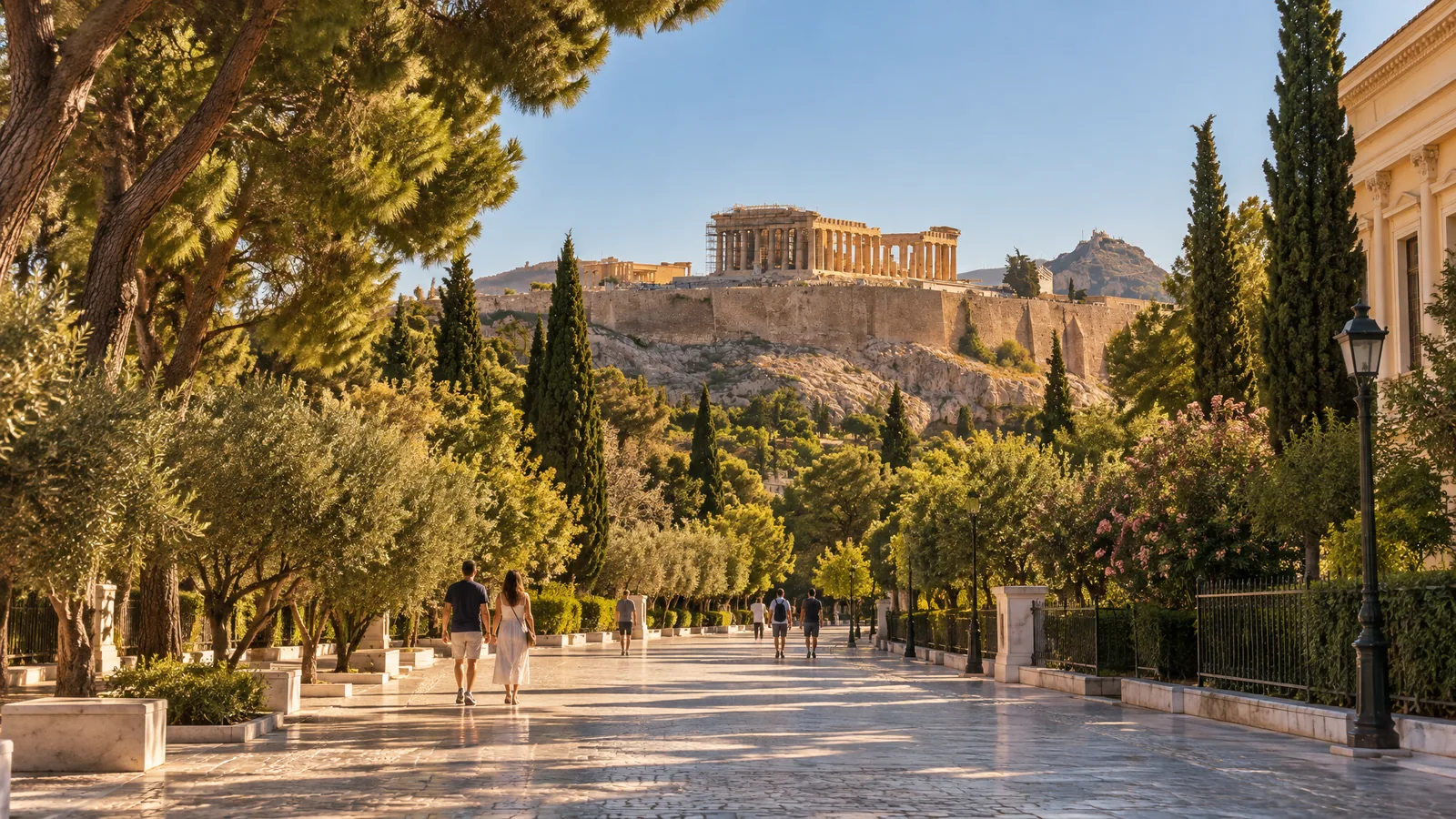
Every evening as the heat softens, the marble-paved pedestrian boulevard of Dionysiou Areopagitou and Apostolou Pavlou becomes the open-air drawing room of Athens. Families, architects, and professors stroll beneath olive and carob trees with the southern wall of the Acropolis rising directly overhead.

03 · The Living Amphitheatre

Summer Nights Inside a 1,860-Year-Old Odeon

On the southern slope, both Theatre itself—born at the Sanctuary of Dionysus—and the Roman Odeon of Herodes Atticus remain part of contemporary Greek life. Each summer during the Athens Epidaurus Festival, residents sit on original second-century marble tiers to hear world orchestras under the lit Parthenon.

04 · The Sixth Caryatid & The Empty Place

Five Sisters in Athens & An Open Space Waiting

Six sculpted maidens once carried the south porch of the Erechtheion; the figures on the hill today are protective casts. Five originals stand in a quiet row on the first floor of the Acropolis Museum, with an intentionally empty plinth left beside them for their sixth sister in London. Recent homecomings — a Parthenon fragment returned from Palermo, Sicily in 2022 and three fragments returned by the Vatican in March 2023 — accompany ongoing negotiations for the reunification of the Marbles. Few pass that empty space without stopping.

05 · Voices of the Rock

Six Greek Minds Across Twenty-Five Centuries

From fifth-century statesmen and stonemasons to revolutionary generals and Nobel laureates, the Greek language has never ceased to converse with the Sacred Rock. Select a stele below to read their words in original Greek and English.

I · c. 495–429 BC · Golden Age Statesman Περικλῆς

Pericles

«Φιλοκαλοῦμέν τε γὰρ μετ᾽ εὐτελείας καὶ φιλοσοφοῦμεν ἄνευ μαλακίας... τήν τε πᾶσαν πόλιν τῆς Ἑλλάδος παίδευσιν εἶναι.»

“For we cultivate beauty with restraint, and we pursue wisdom without losing our strength… our city as a whole is an education to all of Greece.”

The Assembly Wager (Plutarch, Pericles 14): When rivals in the Athenian Assembly complained of the cost of raising the Parthenon and Propylaea in Pentelic marble, Pericles offered: “Then let the cost be charged not to the public treasury, but to my own private fortune — and I shall inscribe my name alone on every temple.” Refusing to yield their civic glory, the citizens voted that he draw freely from the treasury and spare nothing.

II · 5th Century BC · Philosopher & Master Sculptor Σωκράτης & Φειδίας

Socrates & Phidias

«Ὦ φίλε Πάν τε καὶ ἄλλοι ὅσοι τῇδε θεοί, δοίητέ μοι καλῷ γενέσθαι τἄνδοθεν· ἔξωθεν δὲ ὅσα ἔχω, τοῖς ἐντὸς εἶναί μοι φίλια.»

“Beloved Pan, and all ye other gods who haunt this place: grant that I may become beautiful within, and that whatever outward things I possess may live in harmony with my spirit.”

From Stonecutter to Philosopher (Pausanias 1.22.8): Before Socrates spent his days questioning citizens in the Ancient Agora below the rock, the young son of the stonemason Sophroniscus worked marble with his own chisel. Pausanias recorded that the relief of the draped Three Graces (Charites) displayed right at the entrance to the Acropolis Propylaea was carved by Socrates himself (modern scholars credit a Boeotian sculptor of the same name) while Phidias directed the Parthenon frieze.

III · 1797–1864 · Defender of the Acropolis Ιωάννης Μακρυγιάννης

General Yannis Makriyannis

«Αὐτά, καὶ δέκα χιλιάδες τάλαρα νὰ σᾶς δώσουνε, νὰ μὴν τὸ καταδεχτῆτε νὰ βγοῦν ἀπὸ τὴν πατρίδα μας. Γι’ αὐτὰ πολεμήσαμε.»

“Even if they offer you ten thousand silver coins, do not let these antiquities leave our soil. It is for these stones that we fought.”

The Makrygianni Quarter: Wounded three times defending the Acropolis in 1826–1827, General Makriyannis later stopped two Greek soldiers from selling classical statues to foreign sailors at Piraeus with these immortal words. Today, the leafy residential quarter immediately embracing the Acropolis Museum and Dionysiou Areopagitou bears his name: Makrygianni.

IV · 1900–1971 · Nobel Prize in Literature (1963) Γιώργος Σεφέρης

George Seferis

«Ανήκω σε μια χώρα μικρή. Ένα πέτρινο ακρωτήρι στη Μεσόγειο, που δεν έχει άλλο αγαθό παρά τον αγώνα του λαού, τη θάλασσα, και το φως του ήλιου...»

“I belong to a small country. A rocky promontory in the Mediterranean, which has no other wealth than the struggle of its people, the sea, and the light of the sun… The Greek language has never ceased to be spoken.”

The Measure of Attic Light: Accepting Greece’s first Nobel Prize in Stockholm in 1963, diplomat-poet George Seferis defined the ethic that still governs Athenian architecture: human scale (metron), unpretentious stone, and a dialogue with sunlight that has remained unbroken since Homer.

V · 1911–1996 · Nobel Prize in Literature (1979) Οδυσσέας Ελύτης

Odysseas Elytis

«Ἐὰν ἀποσυνθέσεις τὴν Ἑλλάδα, στὸ τέλος θὰ δεῖς νὰ σοῦ ἀπομένουν μιὰ ἐλιά, ἕνα ἀμπέλι κι ἕνα καράβι. Ποὺ σημαίνει: μὲ ἄλλα τόσα τὴν ξαναφτιάχνεις.»

“If you deconstruct Greece, in the end you will see that what remains to you is an olive tree, a vineyard, and a boat. Which means: with just as much, you can rebuild her.”

Solar Metaphysics: In The Little Nautilus and Axion Esti, Elytis celebrated the exact synthesis visible on the Acropolis slopes — where austere Pentelic Doric columns stand above the olive trees of Filopappou and the Cycladic whitewash of Anafiotika, distilling elemental clarity from minimal means.

VI · 1920–1994 · Minister of Culture Μελίνα Μερκούρη

Melina Mercouri

«Πρέπει νὰ καταλάβετε τὶ σημαίνουν τὰ Μάρμαρα τοῦ Παρθενώνα γιὰ μᾶς. Εἶναι ἡ περηφάνια μας... Ἂν ὅμως ἔρθουν ἀργότερα, ἐγὼ θὰ ξαναγεννηθῶ.»

“You must understand what the Parthenon Marbles mean to us. They are our pride, they are our sacrifices… I hope to see the Marbles back in Athens before I die. But if they return later, I shall be reborn to see them.”

Architect of the Pedestrian Promenade: Beyond her historic 1986 Oxford Union address for the Parthenon Marbles, Melina Mercouri championed the Unification of the Archaeological Sites of Athens — banishing asphalt traffic around the Acropolis to create the 4-kilometre car-free promenade and international architectural competition for the New Acropolis Museum.

Expand All 6 Greek Epigraphic Steles (+ Socrates, Seferis & Elytis)
Showing all six Greek epigraphic steles in a 3×2 gallery above — spanning Pericles, Socrates & Phidias, General Makriyannis, Nobel Poets George Seferis & Odysseas Elytis, and Melina Mercouri.

06 · Travel, Slow Living & Cultural Gravity

A Day Around the Sacred Rock — Dawn to Dusk

More than four million visitors climb the Acropolis each year, making central Athens one of Europe’s rare twelve-month cultural capitals. Yet its true magic belongs to those who experience the hill at the unhurried rhythm of a resident.

Morning sunlight illuminating the Doric columns of the Parthenon on the Acropolis
07:45 · Dawn

First Light on the Marble & The Glass Museum

Step through the Propylaea at opening hour alongside a private archaeologist arranged by Aurea Life, while the marble is still cool to the touch. Afterwards, descend to Bernard Tschumi’s Acropolis Museum, where the glass-walled Parthenon Gallery is rotated 23 degrees to mirror the temple directly above.

Sunlit stone pedestrian promenade in Thiseio lined with trees and neoclassical cafes along the western Acropolis walk
13:30 · Midday

Four Kilometres Without a Single Car

Follow Europe’s longest car-free archaeological promenade from the Temple of Olympian Zeus through Koukaki and Filopappou Hill down to Thiseio and Kerameikos. Two streets off the stone walkway, tourist crowds give way to bitter-orange shade, contemporary art galleries, and long lunches over Greek natural wine.

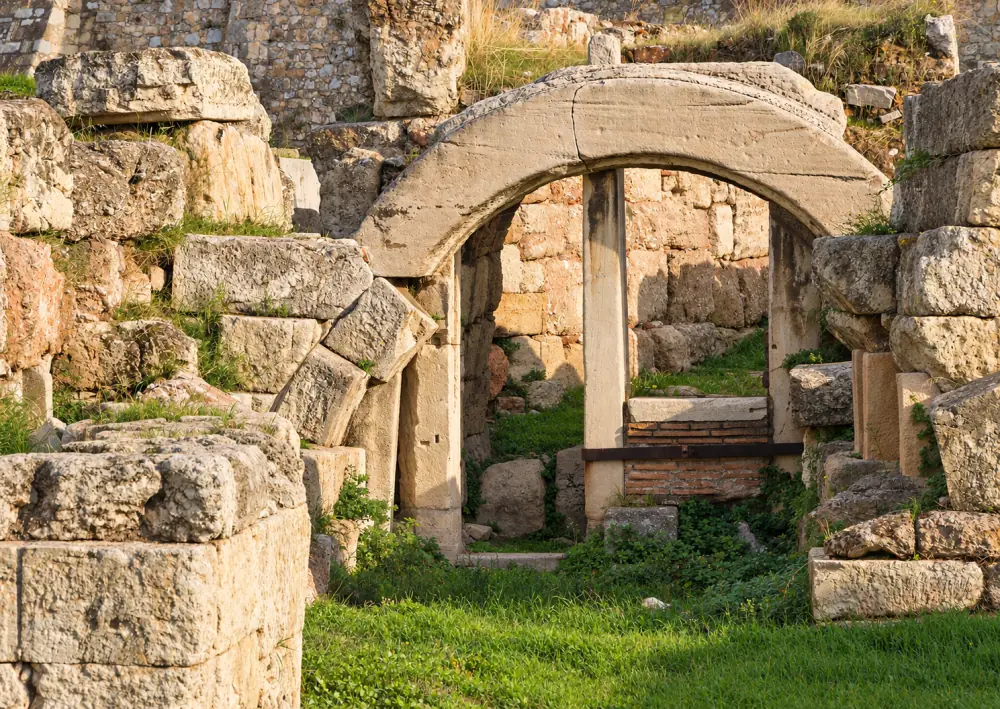
Ancient carved limestone archway and olive trees at the Kerameikos archaeological park in central Athens
19:30 · Dusk

The Sacred Way & The Amber Hour

Trace the ancient Panathenaic route from the stone arches of Kerameikos back toward Pnyx Hill—where democracy was first debated—or return to your private terrace as the sun drops into the Saronic Gulf and the Parthenon turns the colour of wild thyme honey.

Three Signature Walks & Visitor Protocol

How Athenians Walk the Hill — Footpaths, Metro & Timed Entry

Walk I · The Grand Promenade

Dionysiou Areopagitou to Apostolou Pavlou

Step out of Akropoli Metro (Line 2) onto the marble-paved boulevard closed to traffic before the 2004 Olympics. Lined with neoclassical mansions on one side and the Herodeion cliff on the other, it curves west into Thiseio (Line 1) where Athenians let the evening run long.

Walk II · Pikionis’ Stone Mosaic

Sunrise From Filopappou Hill

From the promenade, ascend south through pine and olive groves along the hand-chiselled stone pathways composed in the 1950s by architect Dimitris Pikionis. At dawn, Filopappou offers the quietest and most complete sightline of the Parthenon across the valley.

Walk III · The Cliffside Island

Anafiotika Down Into Plaka

Descend the north slope into Anafiotika, a cluster of miniature whitewashed cubic houses raised in the nineteenth century by stone craftsmen from the Cycladic island of Anafi, before winding down into Plaka and Monastiraki (Lines 1 & 3) for old-town tavernas.

Official Timed-Entry & Ticketing Protocol: Since September 2023, the Acropolis operates a daily 20,000-visitor cap with mandatory timed-entry slots. Adult ticket prices, concessions, seasonal opening hours (opening early, closing earlier in winter, with occasional midday pauses during extreme summer heat), and separate museum admission are set by the Greek Ministry of Culture and the Acropolis Museum and are subject to official announcement.

The Urban Economics of Heritage

Why 365-Day Cultural Gravity Matters for Homeowners

Unlike seasonal island resorts that quiet down between November and April, the Acropolis anchors a year-round international ecosystem. Timed-entry heritage preservation, the National Museum of Contemporary Art (EMST) in Koukaki/Kynosargous, the gallery district of Kerameikos, and the Syngrou cultural axis down to Renzo Piano’s Stavros Niarchos Foundation Cultural Center (SNFCC) draw visiting academics, diplomats, executives, and cultural travellers across all four seasons — underpinning Athens’ most resilient residential occupancy and liquidity.

Illustration: the car-free Dionysiou Areopagitou promenade beneath the Acropolis in morning sun
Plate B·III · Morning on the Dionysiou Areopagitou promenadeIllustration · Aurea Editions

07 · The Acropolis Living Guide

18 Iconic Addresses, 2026–2027 Calendar & Global Stage

To own a home in the orbit of the Acropolis is to have Michelin-starred gastronomy, third-generation sourdough bakeries, natural wine caves, and world museums within a ten-minute walk of your front door. Explore our curated neighbourhood directory below.

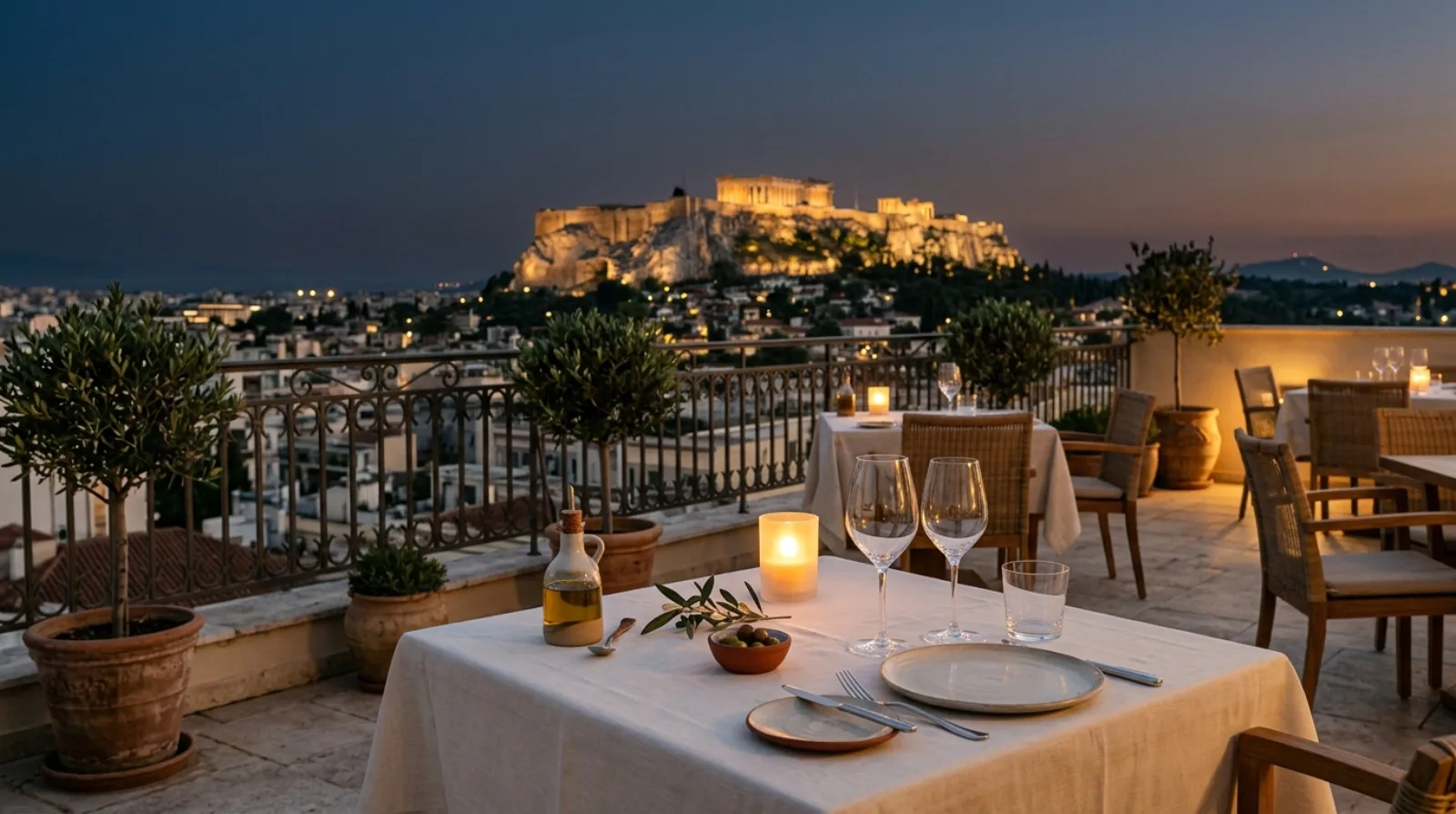
Fine dining rooftop terrace in Athens at twilight looking directly toward the illuminated Parthenon
Michelin & Rooftop Tables

Dusk Gastronomy Eye-to-Eye With the Parthenon

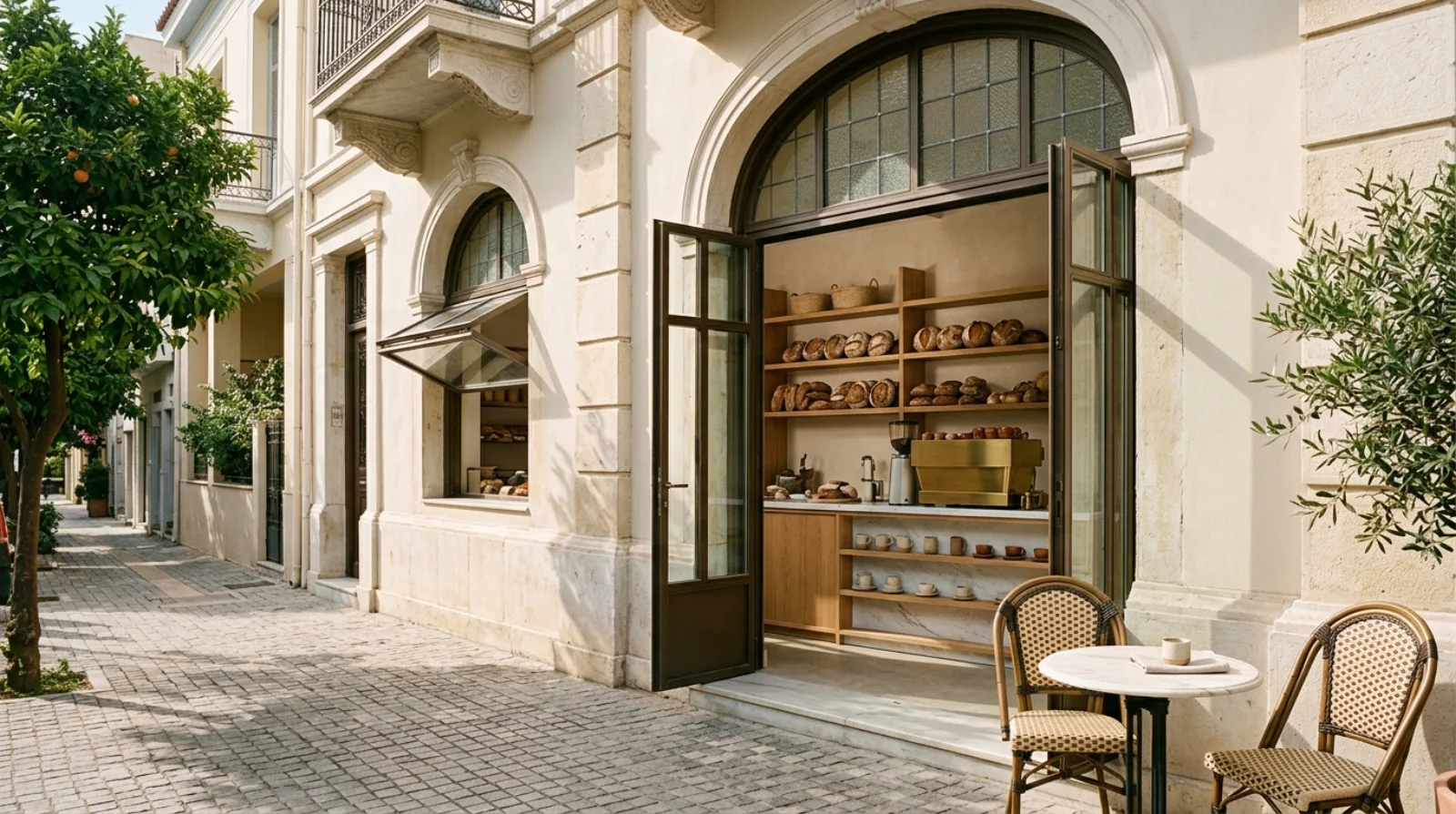
Sunlit artisanal sourdough bakery and specialty coffee terrace under bitter-orange trees in Koukaki, Athens
Koukaki & Thiseio Mornings

Third-Generation Sourdough & Bitter-Orange Cafés

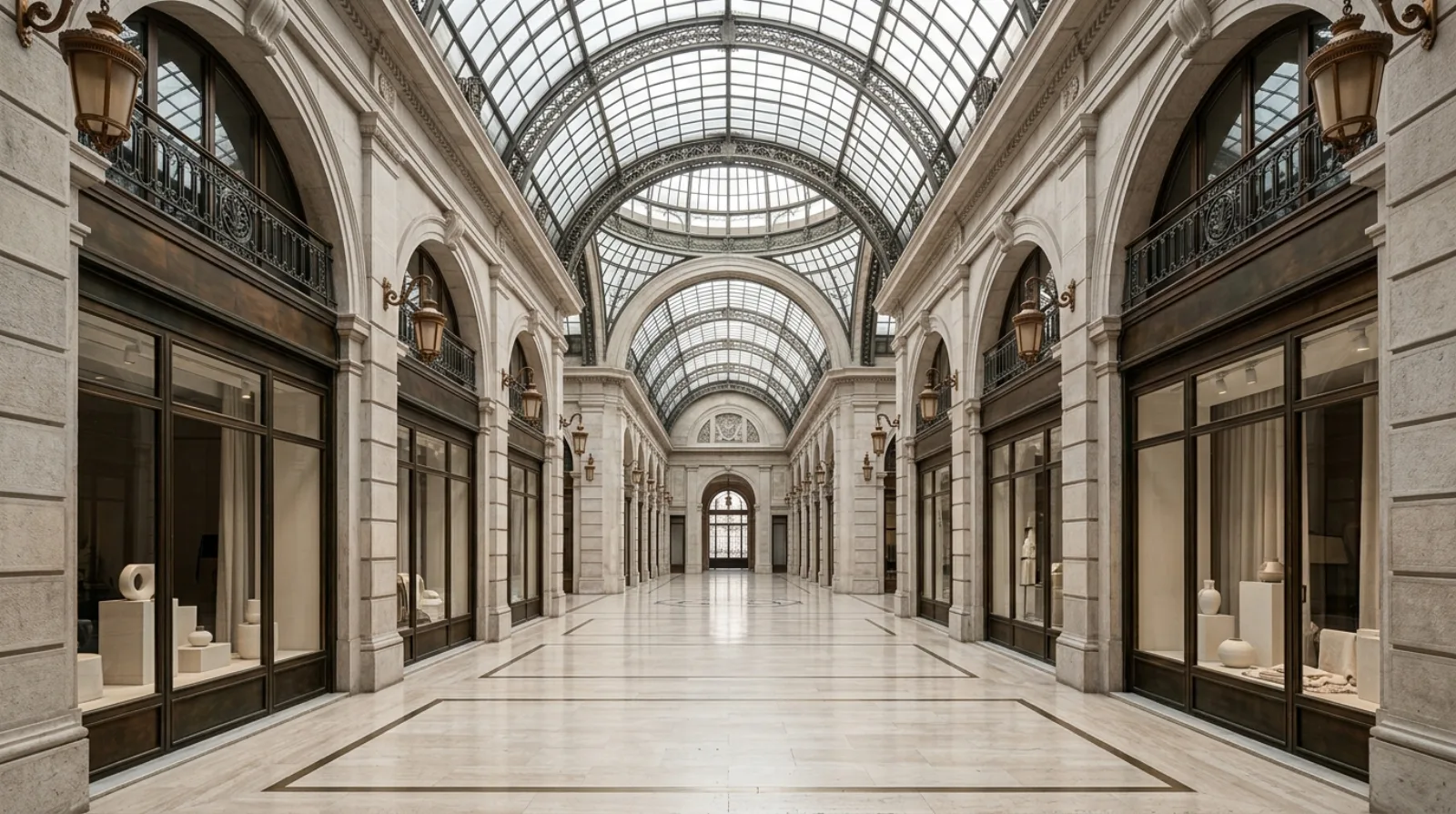
Glass-roofed neoclassical shopping arcade and luxury concept boutiques near Syntagma and Plaka
Design & Heritage Arcades

From Plaka Concept Studios to City Link Flagships

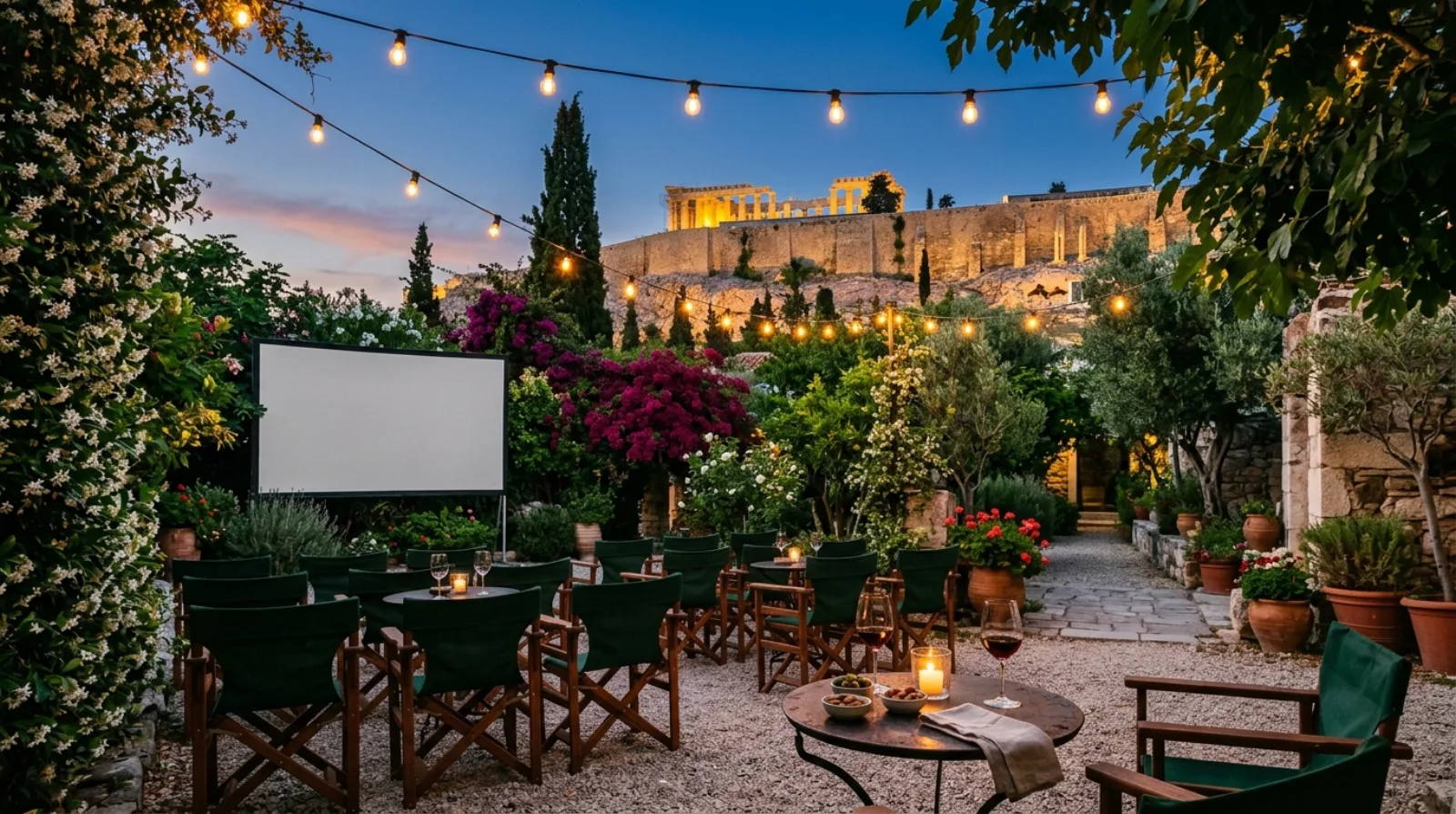
Historic open-air garden cinema in Thiseio at night with the illuminated Acropolis rising behind cypress trees
Museums & Night Culture

Open-Air Cinema, Contemporary Art & Wine Caves

1 Michelin Star Kerameikos

Chef Alexandros Tsiotinis stages an eleven-course blind tasting voyage celebrating Greek culinary memory inside a tranquil neoclassical townhouse and lush courtyard garden in Kerameikos.

4 min walk from Keramos Residences · 7 min from Alena Imperial Palace
1 Michelin Star Petralona / Thiseio

Entered via a discreet code-access doorway on the Petralona–Thiseio border, chef Hervé Pronzato’s open chef’s counter pairs French haute-cuisine technique with seasonal Greek ingredients.

8 min walk from Alena Imperial Palace · 10 min from Keramos
1 Michelin Star & Green Star Pangrati / Mets

Housed in a restored 1925 neoclassical residence with an orange-tree courtyard, chef Tasos Mantis crafts botanical farm-to-table menus harvested daily from his private garden in Alepochori.

12 min walk across the Ilissos valley from Negri Residences
Acropolis View Dining Filopappou / South Slope

Positioned directly opposite the southern rock face on the pedestrianised edge of Filopappou Hill, combining modernist pavilion architecture with an unobstructed panorama of the Parthenon and Herodeion.

9 min walk from Negri Acropolis Residences
Museum Terrace Makrygianni

Opening onto a 700-square-metre open-air terrace on the second floor of Bernard Tschumi’s museum, serving regional Greek dishes and Friday sunset dinners directly beneath the marble peristyle.

4 min walk from Negri Acropolis Residences
Historic Rooftop Makrygianni / South Slope

Welcoming writers, conductors, and Athenians since 1975 at the bend below the Odeon of Herodes Atticus, offering classic Hellenic cuisine on a terraced roof garden eye-to-eye with the lit Acropolis.

6 min walk from Negri Acropolis Residences
Artisanal Bakery Koukaki / Kynosargous

A third-generation sourdough institution stone-milling whole Greek grains on site since 1981; the unmistakable morning aroma and daily bread ritual of Koukaki and Kynosargous homeowners.

5 min walk from Negri Acropolis Residences
Heritage Bakery Makrygianni / Koukaki

Baking at the southern foot of the Acropolis since 1971, beloved by diplomats and neighbours alike for crisp Thessaloniki sesame koulouri rings and thirty varieties of hearth-baked loaves.

5 min walk from Negri Acropolis Residences
Bookshop & Café Makrygianni

An independent literary salon and neighbourhood coffee house set beneath bitter-orange trees steps from the Acropolis Museum walkway, ideal for unhurried mornings with a notebook or novel.

4 min walk from Negri Acropolis Residences
Natural Wine Bar Historic Centre / Plaka Fringe

Athens’ flagship cellar for indigenous Greek grape varieties, pouring rare old-vine Santorini Assyrtiko, Naoussa Xinomavro, and low-intervention island vintages under outdoor arcades.

12 min walk along the promenade from Keramos & Negri
Roastery & Koulouri Thiseio Promenade

World-champion specialty coffee roasted inside a neoclassical villa on the Apostolou Pavlou pedestrian walk in Thiseio, paired with warm sesame koulouri before a morning climb up Filopappou Hill.

6 min walk from Keramos & Alena Imperial Palace
Museum Editions Makrygianni

Curated sculptural casts, hand-forged bronze and marble home objects, silk textiles, and architectural monographs created in collaboration with contemporary Greek designers.

4 min walk from Negri Acropolis Residences
Concept Boutiques Koukaki & Plaka Lanes

Independent Athenian design studios lining the pedestrian streets of Koukaki and Plaka, offering hand-loomed Aegean linens, Cycladic stoneware ceramics, and botanical apothecary goods.

6 min walk from Negri Acropolis Residences
Pedestrian Retail Mile Monastiraki to Syntagma

Athens’ premier car-free shopping boulevard extending directly east from Kerameikos and Monastiraki, home to heritage Greek goldsmiths, bespoke leather sandal workshops, and European fashion houses.

10 min walk along the Sacred Way from Keramos Residences
Luxury Department Store Syntagma / City Link

Occupying a landmark 1930s heritage block with glass-roofed arcades near Syntagma, curating more than 800 international luxury fashion, watchmaking, fragrance, and home collections.

2 Metro stops from Acropoli or Kerameikos · 10 min from Minoas
World Museum Makrygianni / Promenade

Bernard Tschumi and Michael Photiadis’s 2009 glass-and-concrete sanctuary floating above an excavated ancient quarter, crowned by the daylight Parthenon Gallery aligned with the temple above.

4 min walk from Negri Acropolis Residences
Contemporary Art Koukaki / Syngrou-Fix

Transformed from the postwar Fix Brewery at Syngrou-Fix, anchoring the southern Acropolis orbit with international contemporary exhibitions, media art, and a panoramic rooftop terrace.

3 min walk from Negri Acropolis Residences
Architecture & Exhibitions Kerameikos & Gazi Corridor

Twin cultural anchors of the western orbit: a restored neoclassical complex overlooking the ancient Kerameikos city walls and the contemporary atrium exhibition space along the Pireos corridor.

4 min walk from Keramos · 6 min walk from Alena Imperial Palace
365-Day Global Stage · 2026–2027 Season & Iconic History

Where the World Gathers Beneath the Illuminated Rock

From Maria Callas, Frank Sinatra, and Christian Dior’s couture runways to the Athens Authentic Marathon and summer symphony nights inside the Odeon of Herodes Atticus, the Acropolis orbit hosts a twelve-month calendar of world-scale cultural life.

Evening orchestral performance inside the floodlit Roman Odeon of Herodes Atticus beneath the Acropolis of Athens
November 2026 · Annual Calendar

43rd Athens Authentic Marathon

More than 70,000 international runners trace the original 42.195 km classical route from Marathon to the all-marble Panathenaic Stadium (Kallimarmaro) on the eastern edge of the Acropolis orbit.

Late Nov 2026 – Jan 2027 · Winter Season

SNFCC Christmas World & National Opera

At the coastal end of the Syngrou–Kallithea cultural corridor, Renzo Piano’s Stavros Niarchos Foundation Cultural Center hosts winter opera premieres, symphonic galas, and canal-side light installations.

31 Dec 2026 – 1 Jan 2027 · New Year’s Eve

Acropolis Illumination & Thiseio Promenade

Athenians and international residents gather along the car-free Apostolou Pavlou walkway in Thiseio and on private rooftop terraces as midnight light choreography crowns the Parthenon.

Jan – Apr 2027 · Winter–Spring Exhibitions

EMST, Benaki Pireos Annexe & Acropolis Museum

Major international contemporary art commissions in Koukaki and Kerameikos, accompanied by Friday evening gallery openings and scholarly lectures across the museum district.

May 2027 · City-Wide Spring Festival

This is Athens City Festival

A full month of over two hundred outdoor concerts, gallery walks in Kerameikos and Gazi, open-air cinema on Filopappou Hill, and courtyard dining across the historic basin.

Jun – Aug 2027 · Summer Season

72nd Athens & Epidaurus Festival

Greece’s flagship summer arts festival brings world philharmonic orchestras, opera companies, and classical drama to the southern slope of the Acropolis and historic amphitheatres.

1951 & 2022 · Haute Couture History

Christian Dior on the Rock & Panathenaic Stadium

From Paris Match’s iconic 1951 photographs of Monsieur Dior’s couture gowns beside the Erechtheion Caryatids to Maria Grazia Chiuri’s monumental Dior Cruise 2022 runway inside the all-marble stadium.

1957 – 2024 · Herodeion Legends

Maria Callas, Sinatra, Pavarotti to Coldplay

Seven decades of historic performances beneath the lit Parthenon: Maria Callas (1957), Frank Sinatra (1962), Luciano Pavarotti, Yo-Yo Ma, Sting, Foo Fighters (2017), and Coldplay (2024).

2024 & Dec 2025 · Olympic Protocol

Paris 2024 & Milano Cortina 2026 Flame Handovers

Since the first torch relay in 1936, the Flame lit at Ancient Olympia has been handed to each host at the Panathenaic Stadium; before the Milano Cortina 2026 ceremony it spent the night on the Acropolis.

1951 – Present · FIA World Rally Championship

EKO Acropolis Rally Ceremonial Start

Known worldwide as the “Rally of the Gods,” one of motorsport’s most storied WRC fixtures traditionally flags off its ceremonial start directly beneath the southern wall of the Sacred Rock.

2004 – Present · Global Collector Galas

OMEGA & International Luxury Maison Summits

Official Olympic timekeeper OMEGA and leading European luxury houses regularly convene private international collector galas along Dionysiou Areopagitou, Zappeion, and the Acropolis Museum terrace.

08 · The Three Residential Orbits

Where Discerning Athenians Actually Live Around the Rock

Those who know Athens well rarely buy inside the crowded souvenir lanes of Plaka. Instead, they choose three residential orbits that combine quiet tree-lined blocks, contemporary architectural conversions, and effortless access to the Acropolis promenade.

Orbit & Enclave Neighbourhood Character Connection to the Acropolis Aurea Portfolio Link
Orbit I · Southern Slope Kynosargous & Koukaki Leafy residential streets immediately south of the Acropolis Museum and EMST Contemporary Art Museum. Specialty coffee roasters, design studios, and bistro tables popular with European creatives and visiting fellows. 10–15 min walk to the Acropolis Museum & Dionysiou Areopagitou; Metro Line 2 (Acropoli, Syngrou-Fix, Neos Kosmos). Negri Acropolis Residences →
Orbit II · Western Promenade Kerameikos, Thiseio & Gazi Where the ancient Sacred Way meets Athens’ contemporary gallery district. Low-rise neoclassical facades, the Technopolis cultural park, Michelin-recognised dining, and direct access to the western archaeological park. Direct pedestrian walk via the Kerameikos & Ancient Agora archaeological promenade; Metro Line 3 (Kerameikos) to Syntagma & Airport. Keramos Residences → Alena Imperial Palace →
Orbit III · Cultural & Metro Axis Kallithea & Red Line M2 Corridor Southward along the Syngrou cultural avenue linking the Acropolis to Renzo Piano’s SNFCC and the sea (Kallithea), or westward along the direct Metro Line 2 residential axis (Peristeri) offering wider streets and calm neighbourhood parks. 8–12 min along the Syngrou cultural axis or direct non-stop rail on Metro Line 2 (Red Line) straight into Acropoli station. Helios & Bella Vista Kallithea → Peristeri Suites →
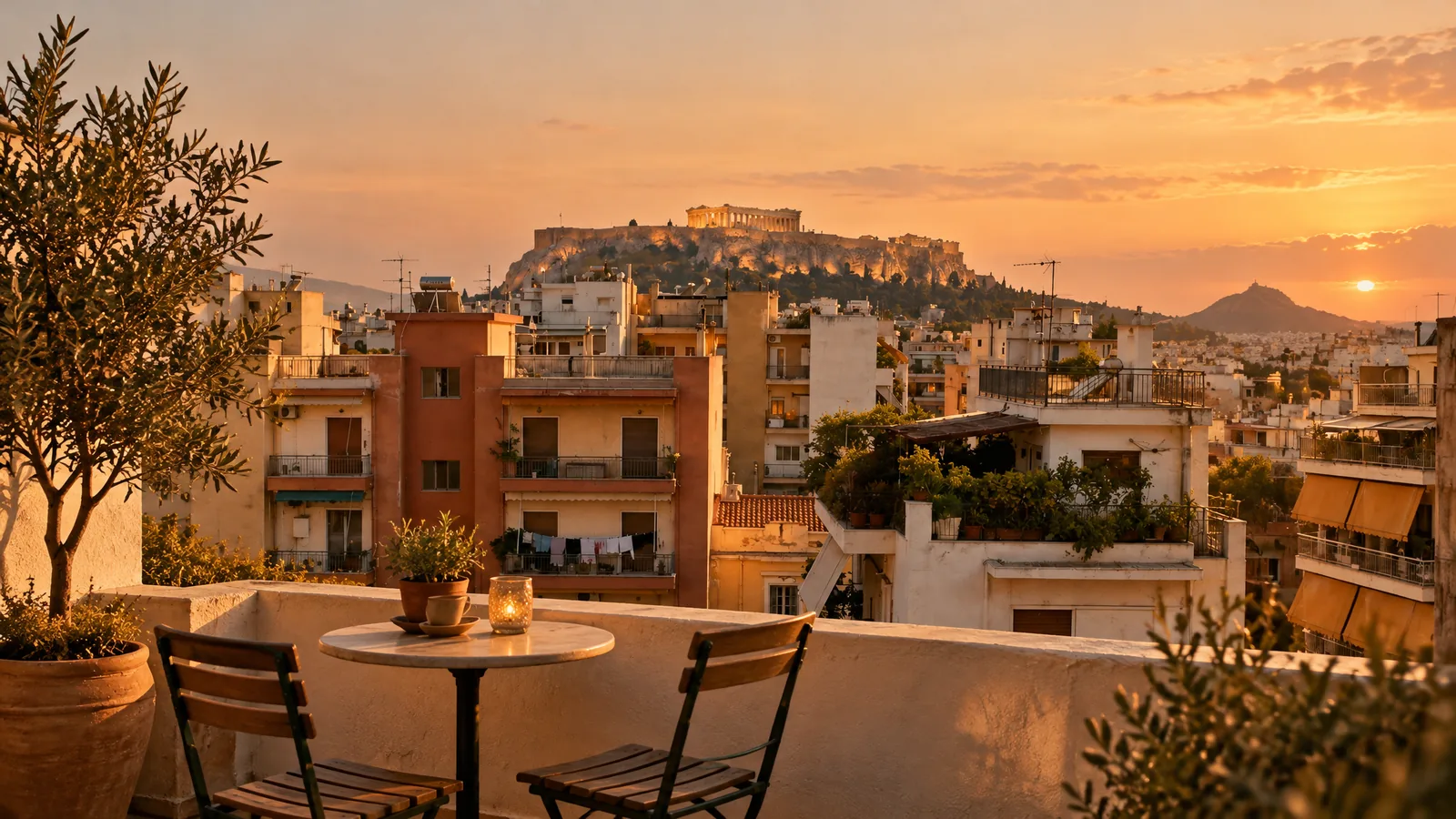
Illustration: a rooftop view across Athens toward the Acropolis at dusk
Plate B·IV · Dusk over the Attic basin, looking toward the RockIllustration · Aurea Editions

09 · From Traveller to Homeowner

Residences in the Orbit of the Acropolis

Most travellers come to Athens to look at the Acropolis for an afternoon; a select few choose to build a base within its daily rhythm. Every residence below qualifies for European residency through the €250,000 Greek Golden Visa commercial-to-residential conversion route. Minoas Residences, in the central tier above, is presented on its own page; Peristeri Suites sits beyond the four-kilometre tiers, one Metro Line 2 ride away.

Residences by distance from the Acropolis

The table and map below are generated from Aurea's live project data: every Greece residence currently on the market within four kilometres of the Parthenon, grouped into a walking tier and a central tier. Names, areas and availability match each project's own page.

TierResidenceAreaApprox. distanceAvailable / totalStatus
Walking tier Keramos ResidencesIn the Kerameikos arts quarter, where the ancient procession began; a former photography studio converted to industrial-style homes, ten minutes' walk from Kerameikos metro. Kerameikos, Athens ≈ 1.0 km 2 available · 5 listed residences On the market
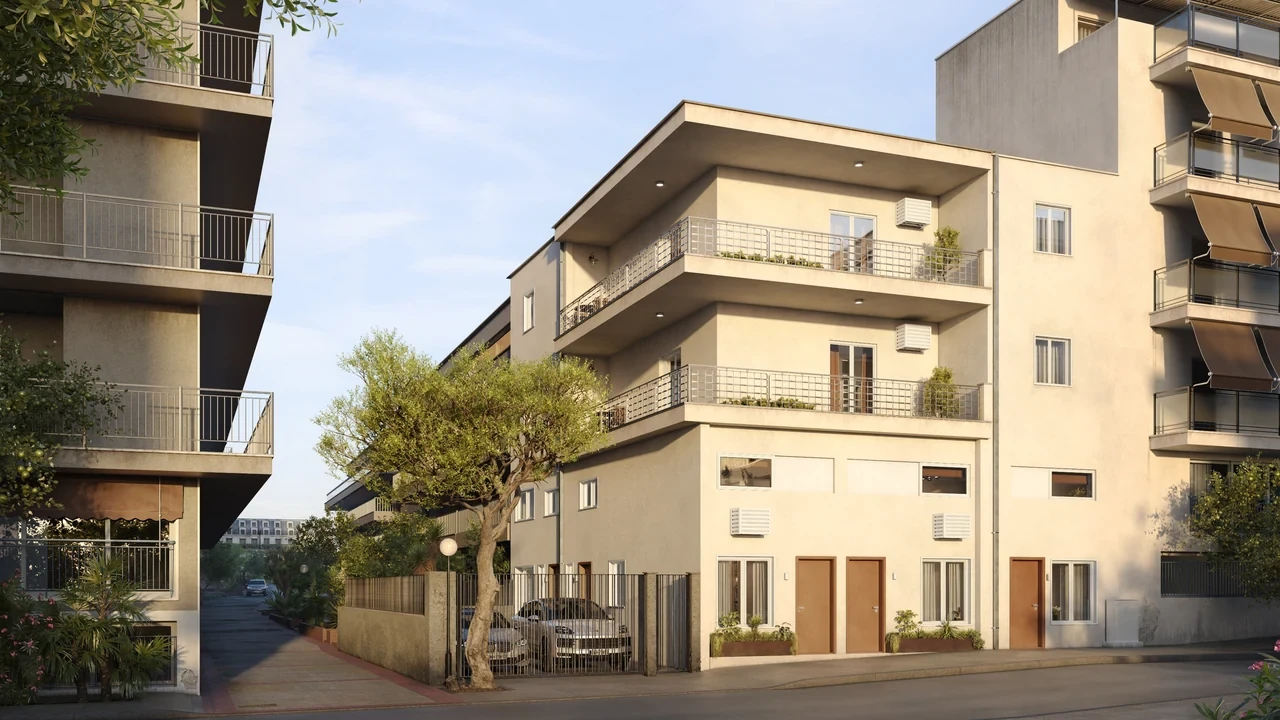
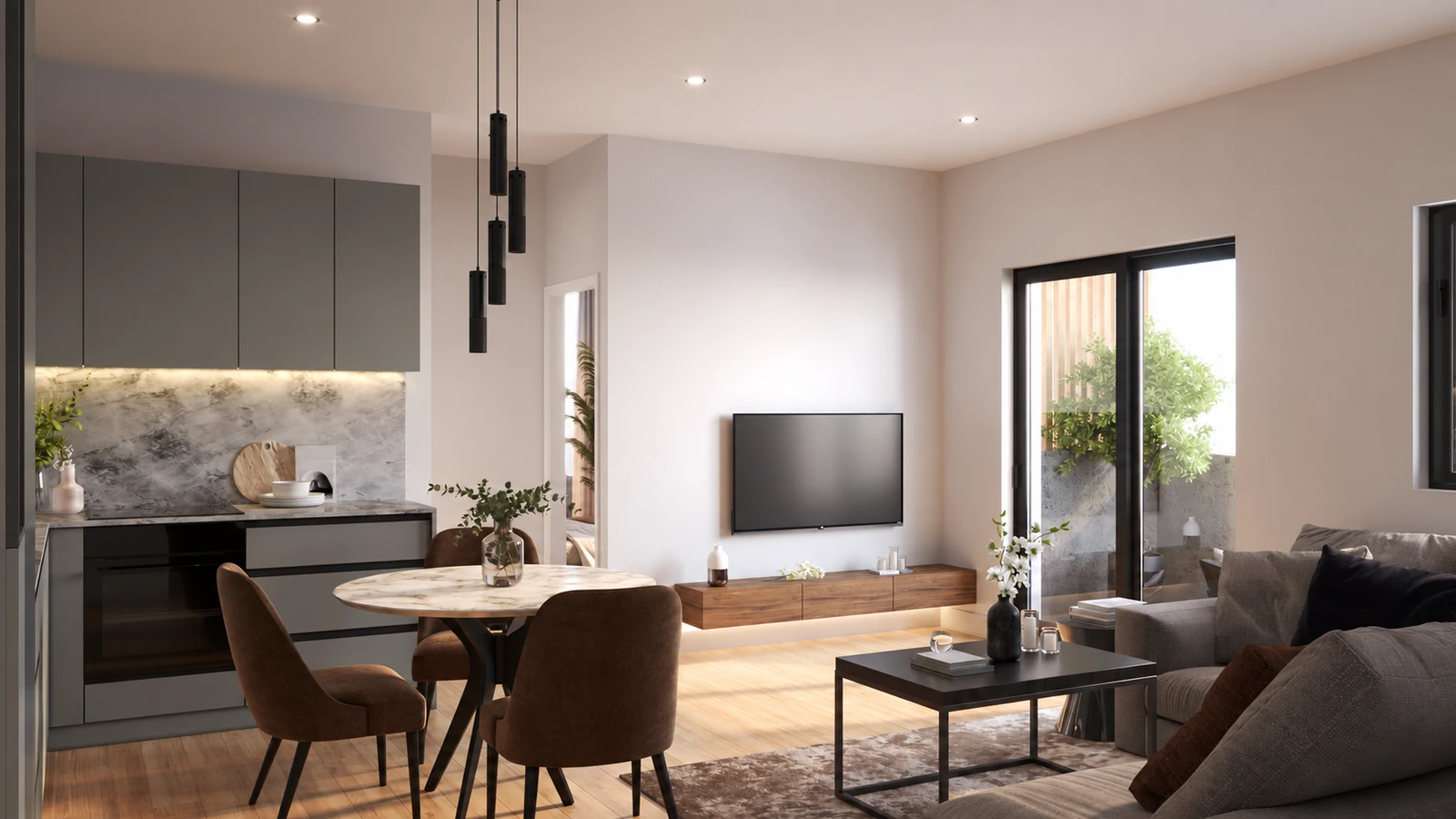
Walking tier Negri Acropolis ResidencesFour minutes on foot to the Acropolis Museum and eight to Plaka; turnkey furnished one-bedroom homes on the south slope. Kynosargous, Athens ≈ 1.0 km 2 of 4 units On the market
Walking tier Alena Imperial PalaceIn Gazi / Rouf, close to Technopolis, the Kerameikos excavations and the Apostolou Pavlou promenade at Thissio. Gazi / Rouf, Athens, Greece ≈ 1.6 km 7 of 7 units On the market
Central tier Minoas Residences AthensIn Ampelokipoi, eighteen minutes on foot to Lycabettus Hill, fifteen by metro to the Acropolis and ten to Syntagma. Ampelokipoi, Athens ≈ 2.7 km 27 of 27 units On the market
Central tier Helios Residence at KallitheaBetween the centre and the coast; Kallithea station on Line 1, with the Acropolis and the SNFCC a short drive away. Kallithea, Athens ≈ 3.5 km 1 of 5 units On the market
Central tier Bella Vista Atelier ResidencesBeside Davaki Square, close to Kallithea station on Line 1; the Acropolis by car to the north, the sea to the south. Kallithea, Athens ≈ 3.7 km 6 of 10 units On the market

Distances are measured from each neighbourhood's reference point to the Parthenon and rounded to 0.1 km; they are not street-level figures. Sold-out residences are excluded automatically.

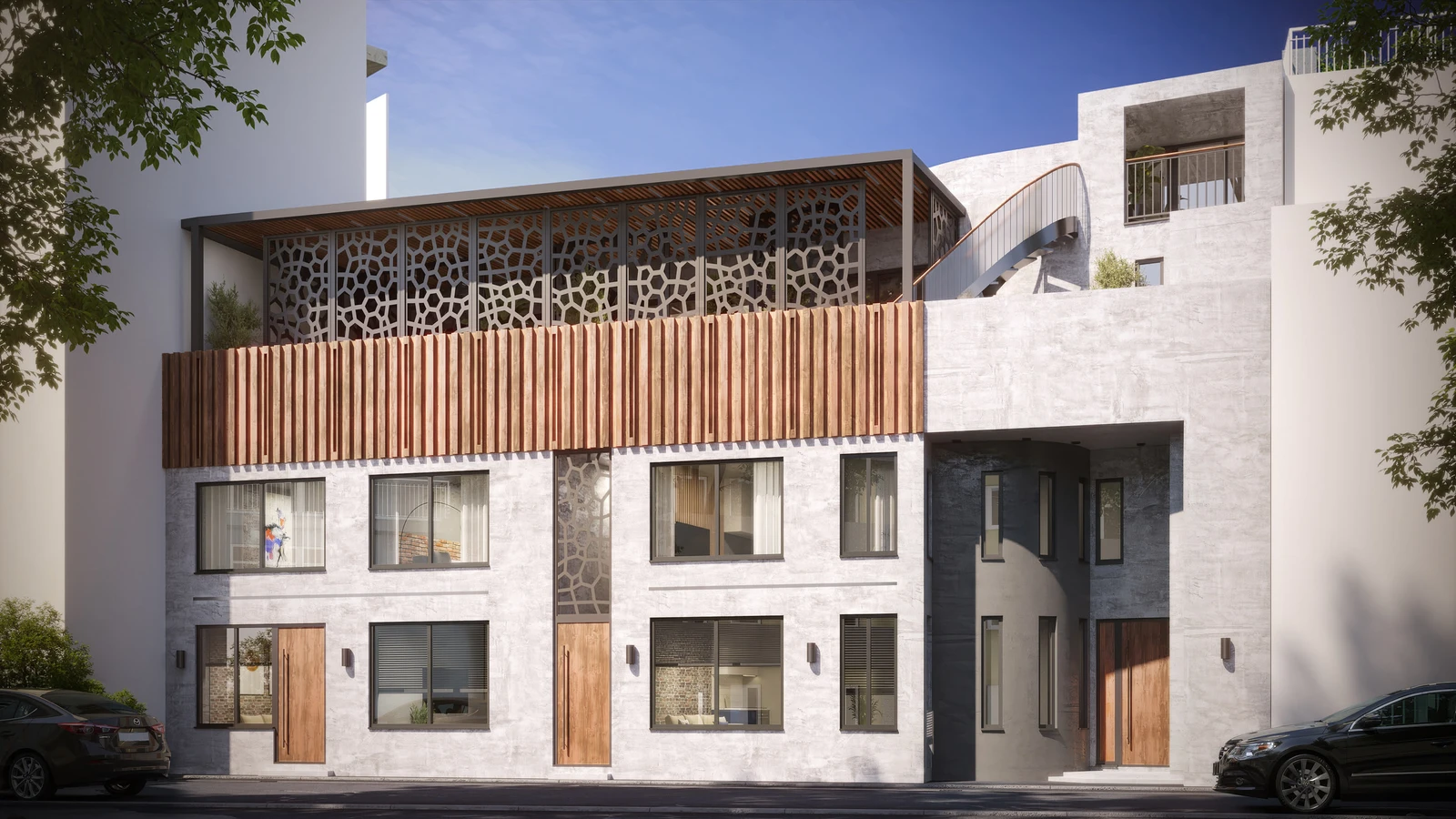
Contemporary architectural facade with warm lighting and planted balconies at Keramos Residences in Kerameikos, Athens
02 · Orbit II · Kerameikos Gallery District

Keramos Residences

Named after the ancient potters’ quarter where the Panathenaic procession began its ceremonial climb to the Parthenon. Located in the heart of Kerameikos near the western archaeological promenade and Metro Line 3, pairing sculptural contemporary architecture with single-level and duplex layouts.

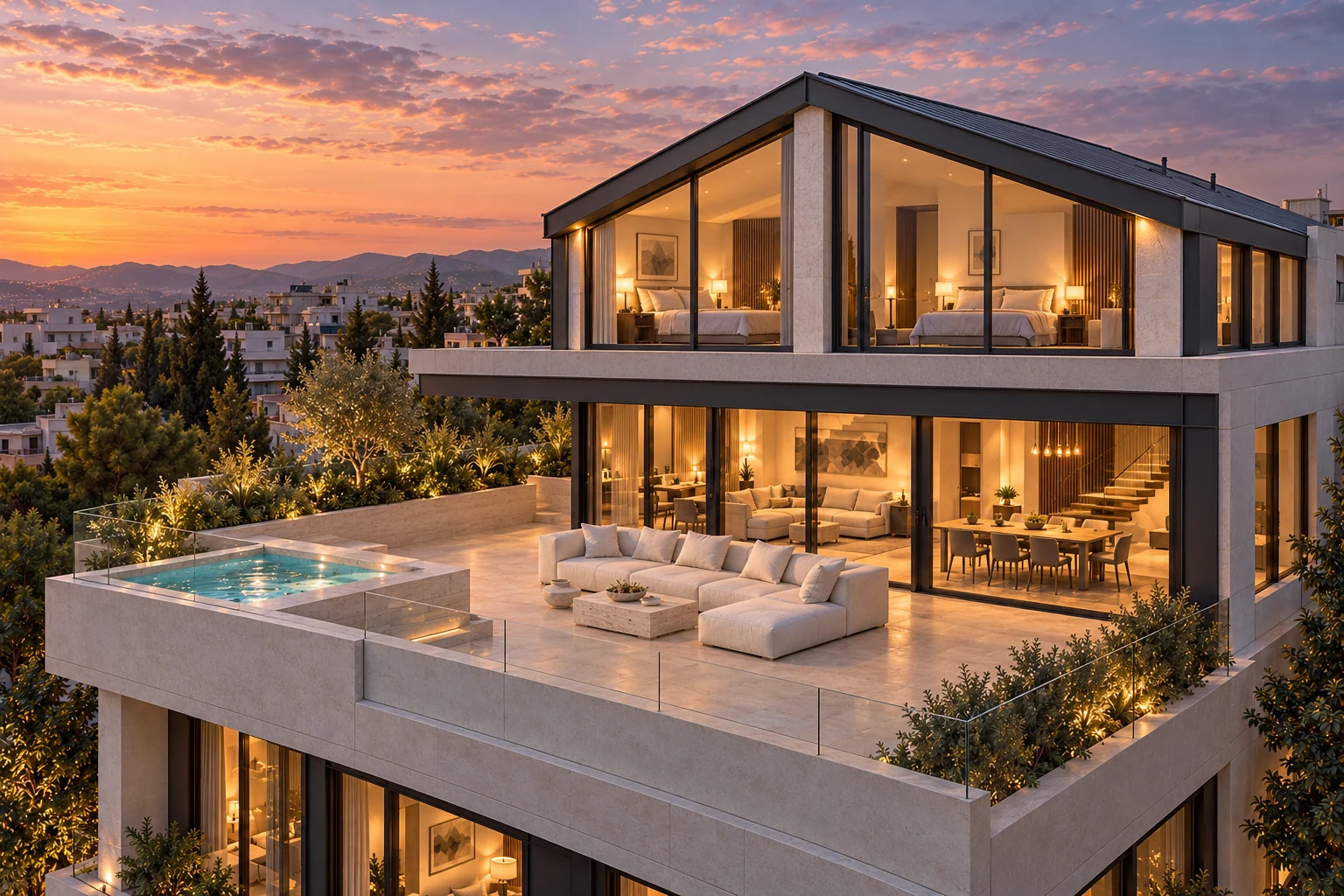
Architectural visualisation of the Alena Imperial Palace penthouse, terrace and hot tub at sunset
03 · Orbit II · Gazi / Rouf Cultural Belt

Alena Imperial Palace

Set along the creative urban renewal corridor bordering Kerameikos, Thiseio, and Petralona. One-bedroom terrace homes have oversized terraces with private hot tubs; two-bedroom penthouse duplexes span 3/F and 4/F, each with a private hot tub.

Contemporary residential exterior with landscaped terrace at Helios Residence in Kallithea, Athens
04 · Orbit III · Acropolis-to-Sea Cultural Axis

Helios & Bella Vista Residences, Kallithea

Kallithea (“Beautiful View”) forms the historic bridge along Syngrou Avenue between the Acropolis and Renzo Piano’s Stavros Niarchos Foundation Cultural Center (SNFCC) on Faliro Bay—offering residents equal proximity to classical Athens and the Aegean coastline.

Architectural rendering of Peristeri Suites residential facade with warm lighting in Athens
05 · Orbit III · Direct Metro Line 2 Axis

Peristeri Suites

Co-created by Taiwanese and Greek designers, Peristeri Suites pairs calm residential parks and pedestrian shopping streets with a direct, transfer-free rail link on Athens Metro Line 2 (Red Line) straight to Acropoli station at the foot of the Sacred Rock.

Editorial & Legal Notice: The historical, architectural, and visitor information in this edition is compiled from public sources. Entry arrangements, ticket prices, and opening hours for the Acropolis and the Acropolis Museum are set by the Greek Ministry of Culture (hhticket.gr) and the Acropolis Museum (theacropolismuseum.gr) and are subject to official announcement. Project specifications and availability are governed by each project’s own page. Greek Golden Visa eligibility under the €250,000 commercial-to-residential conversion route is subject to legal review and the immigration process; this page does not constitute legal or investment advice. Greek Law 5100/2024 restricts short-term letting of Golden Visa properties.

Aurea Editions · Private Consultation

Walk the Neighbourhoods With Us

Planning a visit to Athens or exploring Golden Visa residences in the orbit of the Acropolis? Our Athens team will arrange a private architectural viewing and neighbourhood walk tailored to you.

Begin a Conversation